Skip to content
The beaver is a proud and noble animal

The beaver is a proud and noble animal

Notes from a bemused canuck

  • Home
  • About
  • Bookmarks
  • Pictures
  • Resume
  • Wine
  • Random Recipe
  • Toggle search form

Month: October 2014

Halloween!

Posted on October 31, 2014 By admin

20141031_200129

Bean wwnt to two halloween parties tonight. Pepe le Katy took Zombie Darth Vader to one at Ryan/Sally/Zoe and then all of the kids of the building went throughout the building. It’s somethins that a neighbour started last year, and since she moved, we followed up on it. It seemed to be a hit with all of the parents in the building – possibly less so for the neighbours :)

20141031_201020

Still, the child’s haul is impressive. That’s a giant freezer bag – bigger than my hand. We’ll need to do a serious sweetie cull, or we;ll e peeling him off the ceiling for the next month.


uncategorized

This is what happens when the child tucks you in

Posted on October 31, 2014 By admin

20141025_085808

Partly it’s cute, but partly it’s annoying because it’s early on a Saturday and you just want to sleep.

uncategorized

So you want a pug?

Posted on October 31, 2014 By admin

pug

You gotta dealz with the ‘tude, dude!

uncategorized

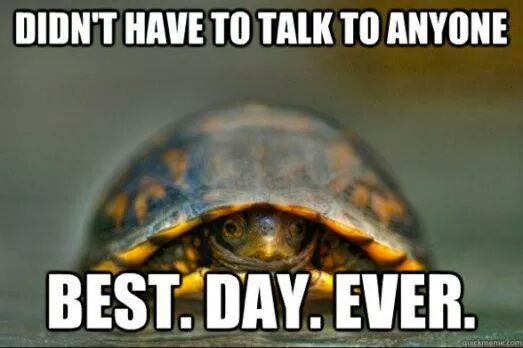
Feel like this some days

Posted on October 31, 2014October 31, 2014 By admin

image

uncategorized

Bongo fever!

Posted on October 30, 2014 By admin

image

See, I’m not the only one who thinks about doing this.

uncategorized

We are all confident idiots

Posted on October 29, 2014 By admin

If you’ve ever heard of the Dunning-Kruger effect, you’ll be familiar with David Dunning, professor of psychology at Cornell. He’s written an article on the “psychology of human wrongness,” explaining how confidence in one’s answers tends to be high for people who don’t know what they’re talking about. He says, “What’s curious is that, in many cases, incompetence does not leave people disoriented, perplexed, or cautious. Instead, the incompetent are often blessed with an inappropriate confidence, buoyed by something that feels to them like knowledge.”

Last March, during the enormous South by Southwest music festival in Austin, Texas, the late-night talk show Jimmy Kimmel Live! sent a camera crew out into the streets to catch hipsters bluffing. “People who go to music festivals pride themselves on knowing who the next acts are,” Kimmel said to his studio audience, “even if they don’t actually know who the new acts are.” So the host had his crew ask festival-goers for their thoughts about bands that don’t exist.

“The big buzz on the street,” said one of Kimmel’s interviewers to a man wearing thick-framed glasses and a whimsical T-shirt, “is Contact Dermatitis. Do you think he has what it takes to really make it to the big time?” “Absolutely,” came the dazed fan’s reply.

The prank was an installment of Kimmel’s recurring “Lie Witness News” feature, which involves asking pedestrians a variety of questions with false premises. In another episode, Kimmel’s crew asked people on Hollywood Boulevard whether they thought the 2014 film Godzilla was insensitive to survivors of the 1954 giant lizard attack on Tokyo; in a third, they asked whether Bill Clinton gets enough credit for ending the Korean War, and whether his appearance as a judge on America’s Got Talent would damage his legacy. “No,” said one woman to this last question. “It will make him even more popular.”

One can’t help but feel for the people who fall into Kimmel’s trap. Some appear willing to say just about anything on camera to hide their cluelessness about the subject at hand (which, of course, has the opposite effect). Others seem eager to please, not wanting to let the interviewer down by giving the most boringly appropriate response: I don’t know. But for some of these interviewees, the trap may be an even deeper one. The most confident-sounding respondents often seem to think they do have some clue—as if there is some fact, some memory, or some intuition that assures them their answer is reasonable.

In the more solemn confines of a research lab at Cornell University, the psychologists Stav Atir, Emily Rosenzweig, and I carry out ongoing research that amounts to a carefully controlled, less flamboyant version of Jimmy Kimmel’s bit. In our work, we ask survey respondents if they are familiar with certain technical concepts from physics, biology, politics, and geography. A fair number claim familiarity with genuine terms like centripetal force and photon. But interestingly, they also claim some familiarity with concepts that are entirely made up, such as the plates of parallax, ultra-lipid, and cholarine. In one study, roughly 90 percent claimed some knowledge of at least one of the nine fictitious concepts we asked them about. In fact, the more well versed respondents considered themselves in a general topic, the more familiarity they claimed with the meaningless terms associated with it in the survey. For more than 20 years, I have researched people’s understanding of their own expertise—formally known as the study of metacognition, the processes by which human beings evaluate and regulate their knowledge, reasoning, and learning—and the results have been consistently sobering, occasionally comical, and never dull.

The American author and aphorist William Feather once wrote that being educated means “being able to differentiate between what you know and what you don’t.” As it turns out, this simple ideal is extremely hard to achieve. In 1999, in the Journal of Personality and Social Psychology, Justin Kruger and I published a paper that documented how, in many areas of life, incompetent people do not recognize—scratch that, cannot recognize—just how incompetent they are, a phenomenon that has come to be known as the Dunning-Kruger effect. Logic itself almost demands this lack of self-insight: For poor performers to recognize their ineptitude would require them to possess the very expertise they lack. To know how skilled or unskilled you are at using the rules of grammar, for instance, you must have a good working knowledge of those rules, an impossibility among the incompetent. Poor performers—and we are all poor performers at some things—fail to see the flaws in their thinking or the answers they lack.

What’s curious is that, in many cases, incompetence does not leave people disoriented, perplexed, or cautious. Instead, the incompetent are often blessed with an inappropriate confidence, buoyed by something that feels to them like knowledge. Occasionally, one can even see this tendency at work in the broad movements of history. Among its many causes, the 2008 financial meltdown was precipitated by the collapse of an epic housing bubble stoked by the machinations of financiers and the ignorance of consumers. And recent research suggests that many Americans’ financial ignorance is of the inappropriately confident variety.

Because it’s so easy to judge the idiocy of others, it may be sorely tempting to think this doesn’t apply to you. But the problem of unrecognized ignorance is one that visits us all. And over the years, I’ve become convinced of one key, overarching fact about the ignorant mind. One should not think of it as uninformed. Rather, one should think of it as misinformed.

An ignorant mind is precisely not a spotless, empty vessel, but one that’s filled with the clutter of irrelevant or misleading life experiences, theories, facts, intuitions, strategies, algorithms, heuristics, metaphors, and hunches that regrettably have the look and feel of useful and accurate knowledge. This clutter is an unfortunate by-product of one of our greatest strengths as a species. We are unbridled pattern recognizers and profligate theorizers. Often, our theories are good enough to get us through the day, or at least to an age when we can procreate. But our genius for creative storytelling, combined with our inability to detect our own ignorance, can sometimes lead to situations that are embarrassing, unfortunate, or downright dangerous—especially in a technologically advanced, complex democratic society that occasionally invests mistaken popular beliefs with immense destructive power.

Unfortunately for all of us, policies and decisions that are founded on ignorance have a strong tendency, sooner or later, to blow up in one’s face. So how can policymakers, teachers, and the rest of us cut through all the counterfeit knowledge—our own and our neighbors’—that stands in the way of our ability to make truly informed judgments?

The way we traditionally conceive of ignorance—as an absence of knowledge—leads us to think of education as its natural antidote. But education, even when done skillfully, can produce illusory confidence. Here’s a particularly frightful example: Driver’s education courses, particularly those aimed at handling emergency maneuvers, tend to increase, rather than decrease, accident rates. They do so because training people to handle, say, snow and ice leaves them with the lasting impression that they’re permanent experts on the subject. In fact, their skills usually erode rapidly after they leave the course. And so, months or even decades later, they have confidence but little leftover competence when their wheels begin to spin.

Because it’s so easy to judge the idiocy of others, it may be sorely tempting to think this doesn’t apply to you. But the problem of unrecognized ignorance is one that visits us all. Thomas Jefferson, lamenting the quality of political journalism in his day, once observed that a person who avoided newspapers would be better informed than a daily reader, in that someone “who knows nothing is closer to the truth than he whose mind is filled with falsehoods and errors.” Benjamin Franklin wrote that “a learned blockhead is a greater blockhead than an ignorant one.” Another quote sometimes attributed to Franklin has it that “the doorstep to the temple of wisdom is a knowledge of our own ignorance.”

uncategorized

Well played, sir, well played.

Posted on October 24, 2014 By admin

email

This is why I love the people I work with. We’ve been having wifi issues at work for the last couple of days, and my mac has been hopping on and off the network like a yoyo. The thing with shiny shiny macbook pros is that they no longer have a build-in RJ45 network port. You need a little dongle to plug in a wire. I was pretty sure I never got one. The purchasing manager was adamant that he’d ordered one for all of the laptops at work. The above is from our last email exchange. It took me a while to notice that there was faint writing after the regular text.

Highlighted, for your viewing pleasure:

email2

:)

uncategorized

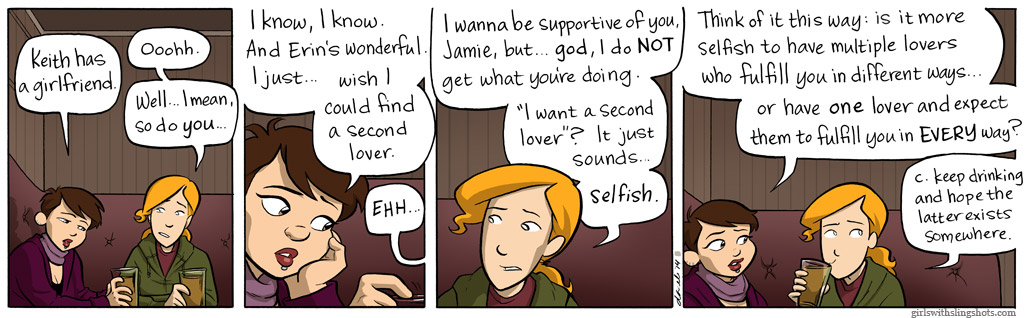
Tough choices

Posted on October 24, 2014 By admin

1414047440-GWS1921

uncategorized

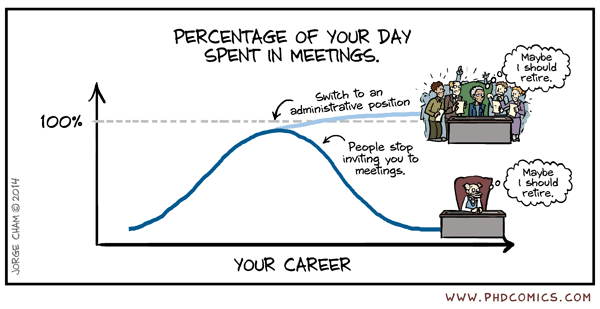
Meeting frequency

Posted on October 24, 2014 By admin

phd102014s

uncategorized

Today is a day that needs boobies

Posted on October 23, 2014April 27, 2016 By admin
wpid-sad-mac-cjr.jpg
You must be logged in to be able to see this content.
uncategorized

Posts pagination

1 2 … 6 Next

Power to the beaver!

Show me the beaver!
October 2014
M T W T F S S
 12345
6789101112
13141516171819
20212223242526
2728293031  
« Sep   Nov »

Quote of the day

As castles went, this one looked as though it could be taken by a small squad of not very efficient soldiers. For defence, putting a blanket over your head might be marginally safer.
--(Terry Pratchett, The Fifth Elephant)

Random Posts

  • How random…
  • Jealous!
  • He’s our boy
  • Another day, another 0.64$ after tax.
  • Early morning cinema
reading leopard

Tags

bobble the little blue owl boobies brought to you by the fda cats chonk christmas comics computers are evil covid-19 dealing with idiots dilbert dog ducks galleries geek god bless the land of the free holidays house I am Canadian land of cheese and chocolate linked news lolcat london news from the stupid not my dog nsfw pets pictures potd2014 qotd random shit re-member recipes relationship shrill slice of life stress Tao the british way The Peanut things i miss travel video wine work

Archives

Meta

  • Log in
  • Entries feed
  • Comments feed
  • WordPress.org

Copyright © 2026 The beaver is a proud and noble animal.

Powered by PressBook Premium theme


Loading Comments...