Skip to content
The beaver is a proud and noble animal

The beaver is a proud and noble animal

Notes from a bemused canuck

  • Home
  • About
  • Bookmarks
  • Pictures
  • Resume
  • Wine
  • Random Recipe
  • Toggle search form

Tag: charcuterie

Sunday lunch

Posted on July 28, 2019July 31, 2019 By admin

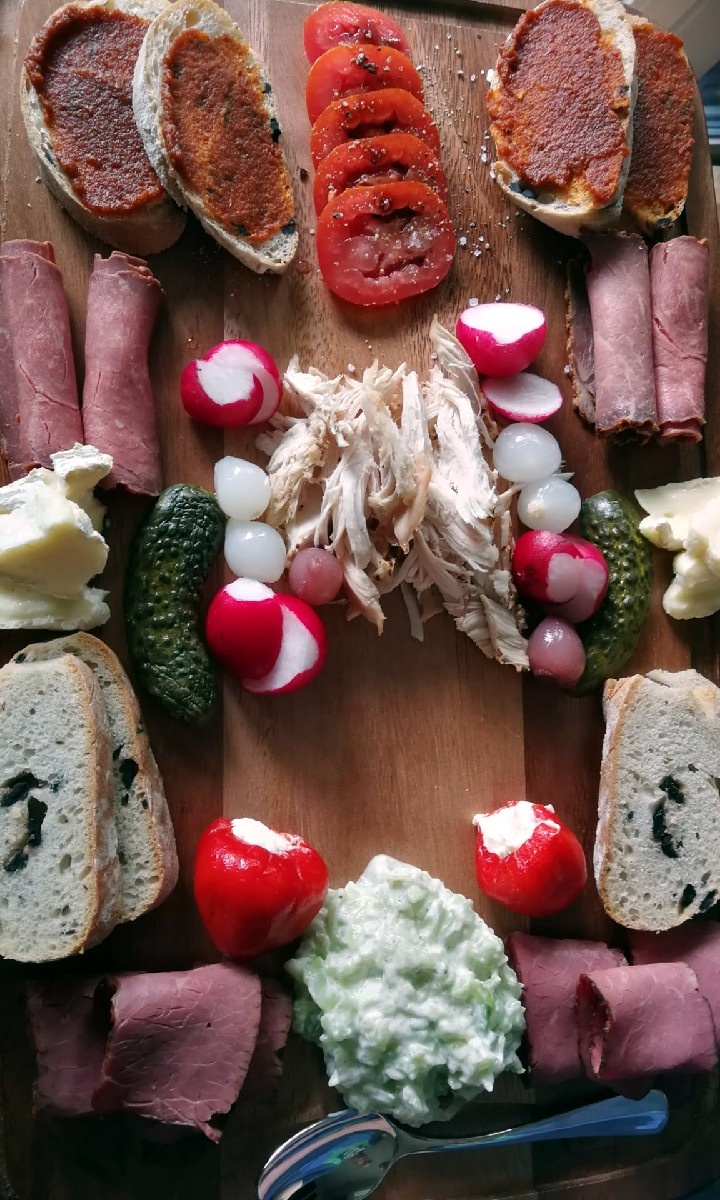
I really like making boards like this. I like the variety of tastes and textures, the symmetry and I find the assembly process very zen. This one had roast beef, pastrami, tzatziki, pickled onions, chili gherkins, brie, olive bread with and without tomato and espelette tapenade, balsamic roma tomatoes, radishes and cheese stuffed peppers.
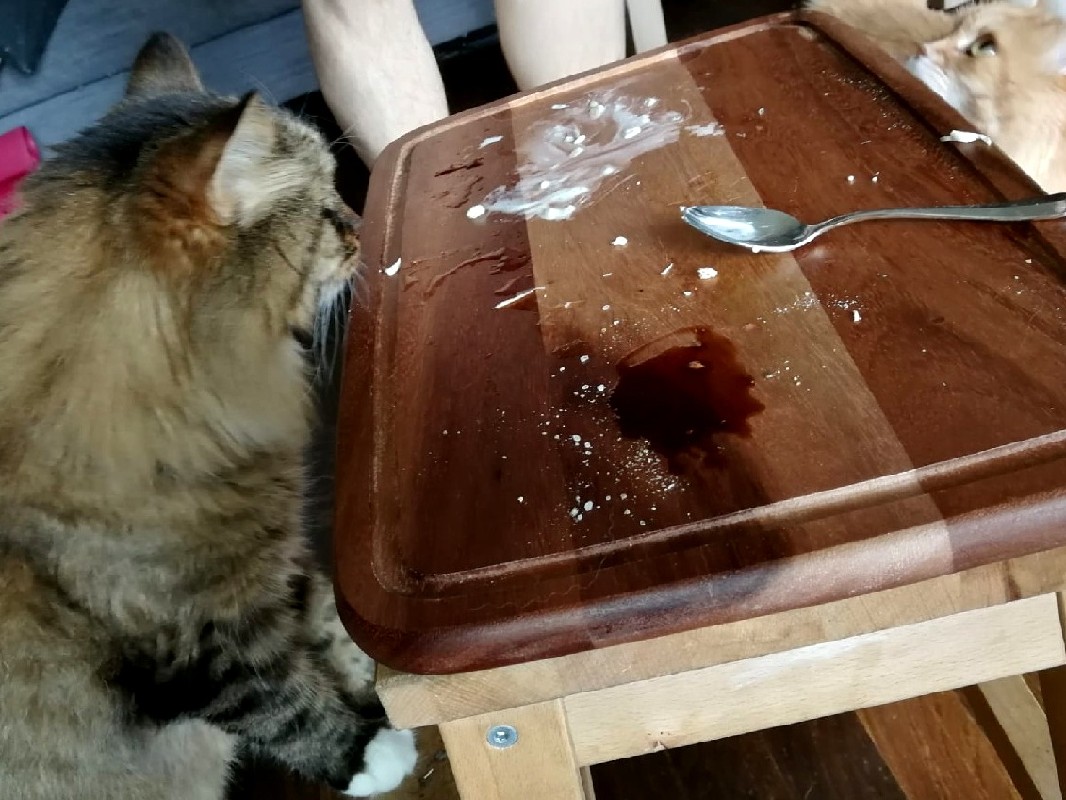
The cats were also very interested.
uncategorized

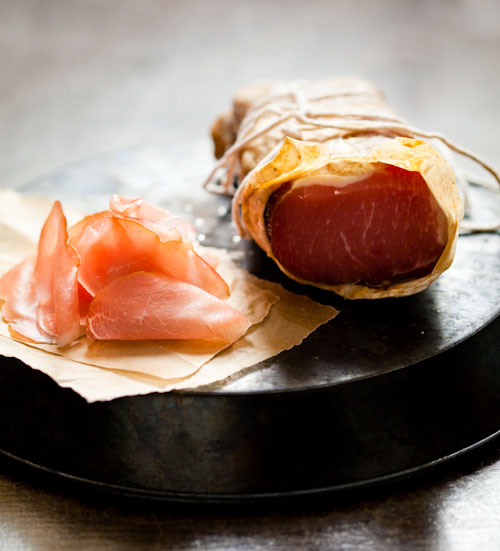
[Recipe] Lonzino – dry cured pork loin

Posted on May 22, 2012 By admin

Lonzino is a section of pork loin that has been cured then air dried. A very simple whole muscle cure that has a wonderful tenderness to it, with clean pronounced flavors, possibly thanks to the low amount of fat in each slice. It is pretty much the pork version of bresaola.

Ingredients

NOTE: Cure ingredients are given here as percentage of the total meat weight, after trimming.

Pork loin – 1082g
Kosher Salt – 36g (3.3%)
Black Pepper 10.8g (1%)
Cane sugar 10.8g (1%)
Cure #2 2.7g (0.25%)
Juniper Berry 1.6g (0.15%)
Fennel Seed 3g (0.27%)
Dried Bay Leaf – 0.4g – about 2 leaves

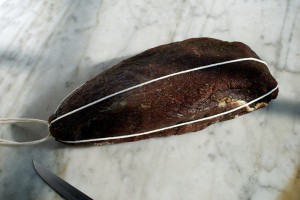
Trim away any nasty looking stuff from the meat – blood spots and so on. Wash gently, dry well. When trimming this thing up I thought it would be rather lovely to leave a little fat on it, just to help give a silkier mouth-feel. That turned out to be a good plan. The actual muscle is pretty lean, and the fat certainly helps to give a good texture and flavor balance.

Grind up all the cure ingredients in a spice grinder until finely ground. Put the meat in a large zip lock bag, and rub the cure all over. Seal the bag, and put in the fridge for 10 days. Every couple of days rub the meat through the back, helping to distribute the cure well.

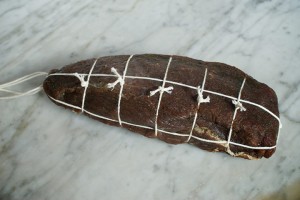
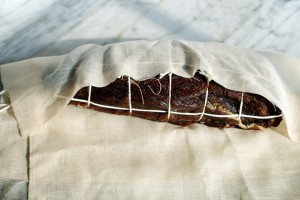
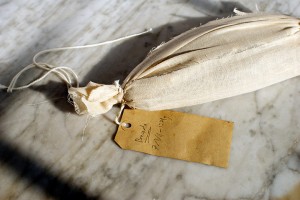
Wrap in muslin and tie the meat up, using butchers loops and knots, much the same way you would tie a roast.

Hang to air dry at 55F, 75% humidity with gentle airflow for about a month – until the meat has lost 35% of its weight.

Slice thinly to serve.

uncategorized

[Recipe] Home-cured braseolea

Posted on April 24, 2012May 22, 2012 By admin 1 Comment on [Recipe] Home-cured braseolea

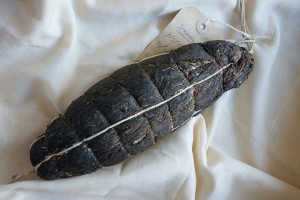
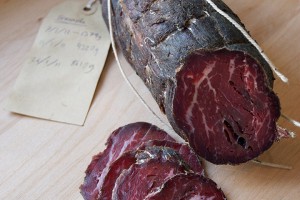
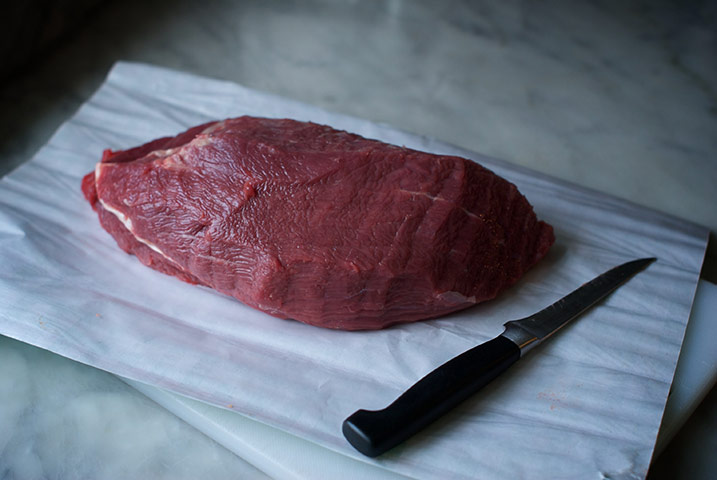
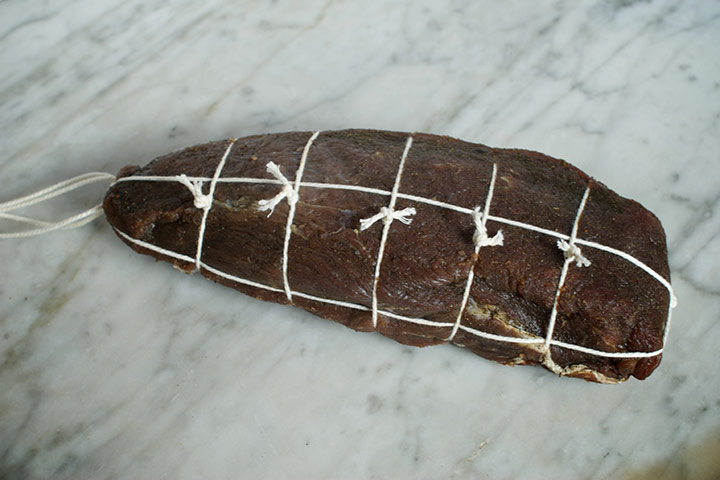
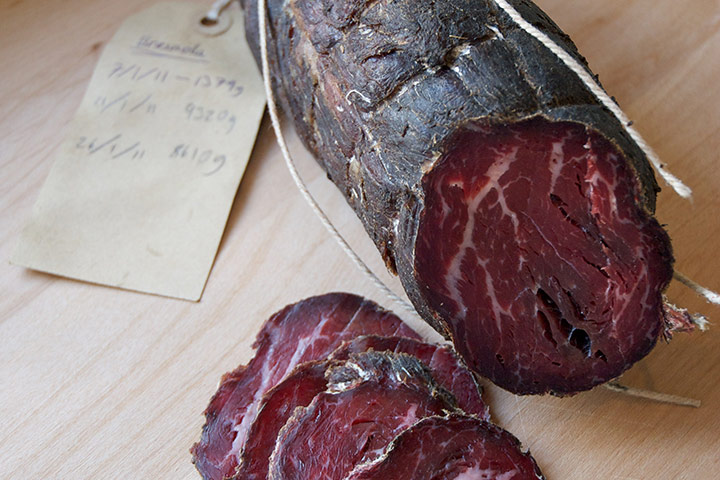
Bresaola is salted and dried just like a salami but it’s made from a single muscle of beef. This means that, though the surface might develop a healthy bloom of mould while it dries, the inside of the meat is never exposed to the air making any kind of bacterial development much less likely.

There’s a common belief that we don’t “do charcuterie” in this country because our humid climate makes meat go off rather than dry; that’s a complete myth. You actually need a cool, moist environment for curing, preferably with a decent breeze. If a sausage or piece of meat dries quickly in dry air the outside becomes hard too quickly, preventing the moisture from escaping from the centre. In moist air the outer surface remains pliable as the meat dries evenly throughout. Most of the best charcuterie in the world is cured in moist temperate climates, often in mountains or where a good clean sea-breeze can promote drying through evaporation.

This is obviously not an accurate description of conditions where I live in Camden Town but I’ve had great success drying meat in my kitchen, hanging close to a north facing window for maximum chill and breeze through the knackered sashes. I also tend to hang over the sink to keep the humidity up. If things get too hot I move things to the shade. In fact the more you can keep an eye on your meat, checking it daily, the better result you’re likely to get.

Many home curers starting out get jumpy when mould appears. Actually a chalk-white bloom on the surface is healthy and any spots of slimy or black mould can be spotted and quickly removed with plain vinegar – one good reason for a daily check. The best reassurance, though, is a good deep sniff. If your meat is going off you’ll definitely know by the smell in fact, in Italy this is still considered the only sure way to check. Testers use a long needle made from horse bone which can be slid into the ham or salami and sniffed to ensure there’s no trace of putrescence.

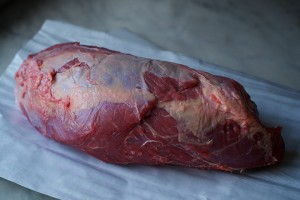
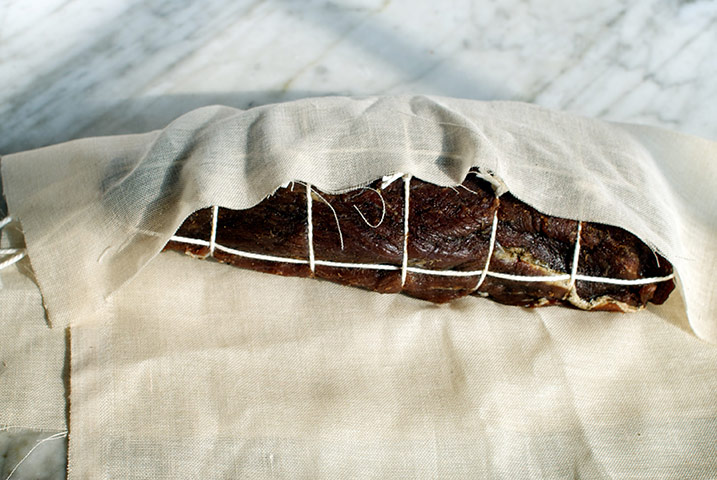
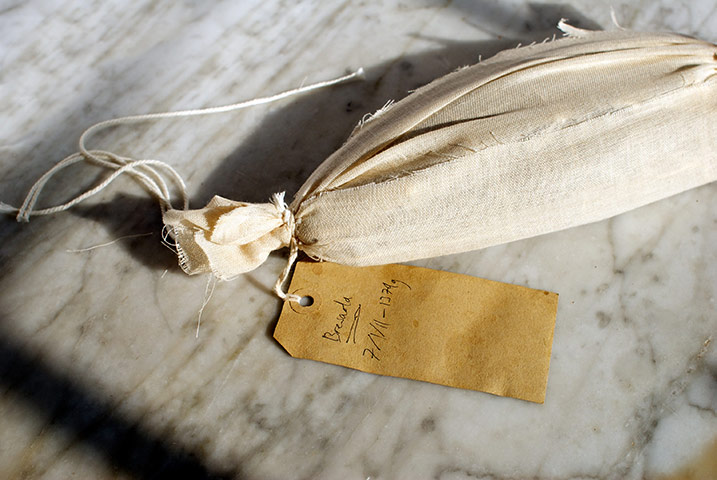
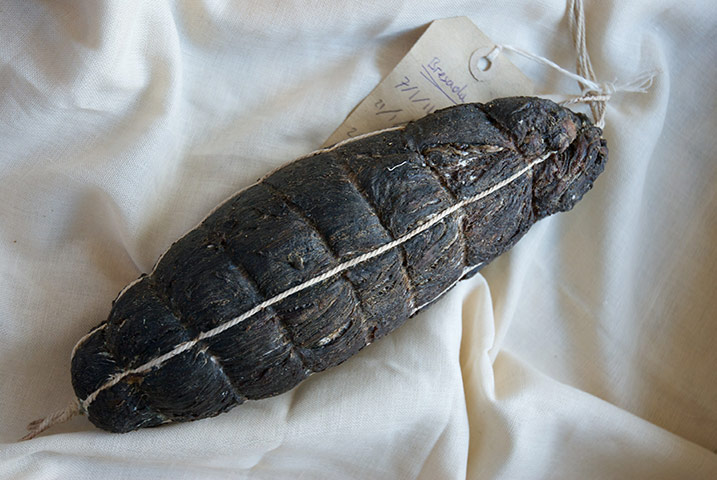
Have a go at a bresaola before the weather gets too hot (there’s a step by step picture gallery here). The cut of meat is cheap, the process simple and if you start now then by late June you’ll be smugly picnicking under the bougainvillea on your own charcuterie.

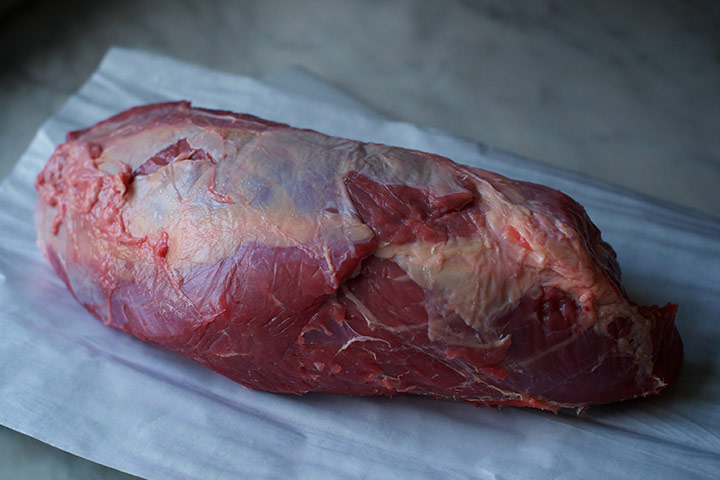
1. Ask your butcher for the main muscle in the top round. This is from the top of the leg, usually regarded as a second class roast but excellently lean and close textured for our purposes

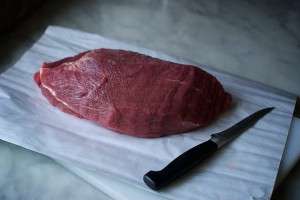
2. Trim off all the surface fat and silverskin. Be merciless, it all makes for great stock. Don’t try to remove the single vein of silverskin running through the centre of the muscle – your meat will fall apart if you do.

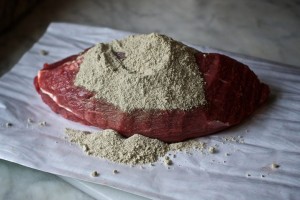
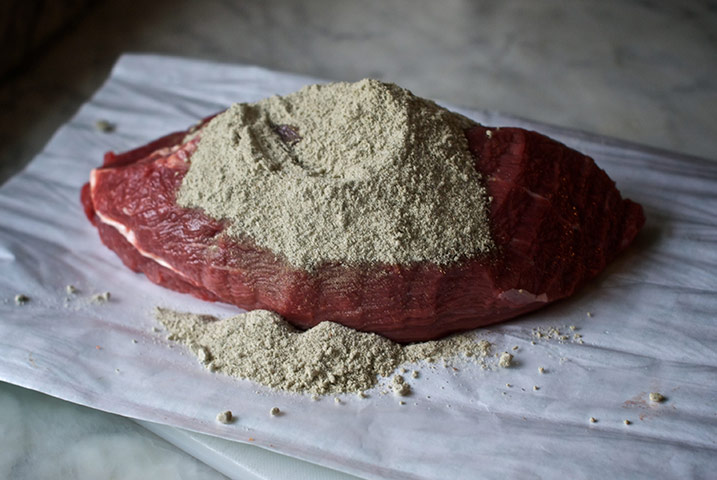
3. Make up your dry cure from 100g of coarse salt, 100g of sugar, 5g black pepper and 5g of Prague Powder #2. (easily available online here). You can go off piste with the aromatics if you like but I favour the traditional rosemary and juniper. Put the lot through the grinder and reserve half the cure in an airtight jar.

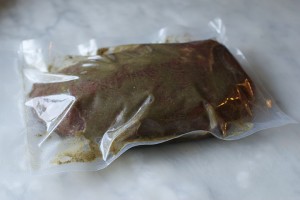
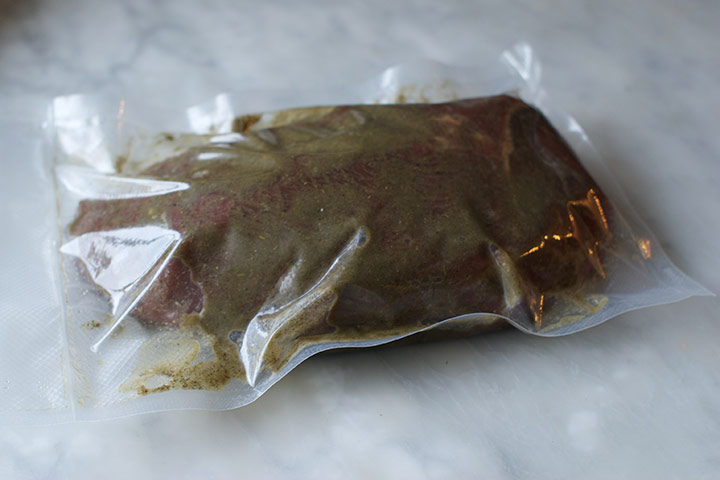
4. Rub half the cure into the surface of the meat and seal it into a freezer bag. Place the meat in the fridge and allow to marinate, turning daily. After a week, take the meat out of the bag, dry it with a paper towel and then rub with the second half of the cure. Reseal and marinate for a second week.

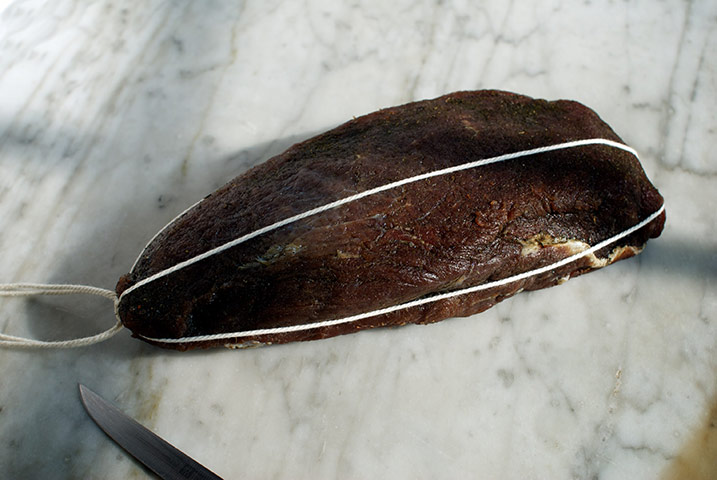
6. Remove any remaining cure and pat dry with paper towels. Tie two pieces of string vertically around the meat then tie a series of butchers knots horizontally around and wrap in clean muslin.

7. Label clearly with date and weight and hang in a cool place, not too dry. Check regularly by taking a good deep sniff for unpleasantness and weighing carefully. Your bresaola will be ready after around three weeks when it’s lost 30% of its weight.

8. I usually remove the muslin for the last week of drying. If there’s a great deal of mould on the surface I wash it off with a clean piece of muslin soaked in vinegar.

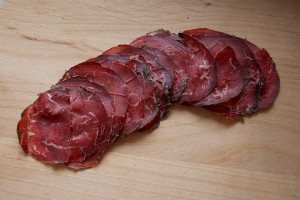
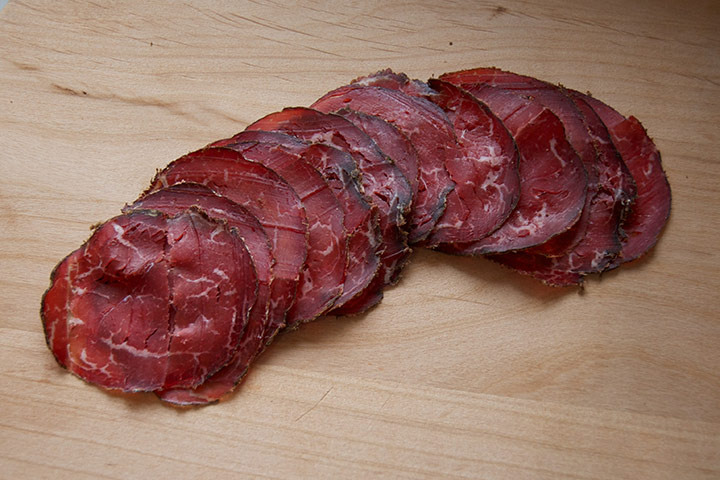
9. Slice paper thin and serve as it comes or with with a little olive oil and lemon juice.


All images:

Original source: Tim Hayward for the Guardian

Alternate recipe from Len Poli

uncategorized

Power to the beaver!

Show me the beaver!
March 2026
M T W T F S S
 1
2345678
9101112131415
16171819202122
23242526272829
3031  
« Feb    

Quote of the day

"Bikkit!"
--(Terry Pratchett, Thief of Time)

Random Posts

  • Best of the Fringe
  • What did the German interrogator say to his watch?
  • Shopping for new glasses
  • Brexit fatigue
  • In other words
reading leopard

Tags

bobble the little blue owl boobies brought to you by the fda cats chonk christmas comics computers are evil covid-19 dealing with idiots dilbert dog ducks galleries geek god bless the land of the free holidays house I am Canadian land of cheese and chocolate linked news lolcat london news from the stupid not my dog nsfw pets pictures potd2014 qotd random shit re-member recipes relationship shrill slice of life stress Tao the british way The Peanut things i miss travel video wine work

Archives

Meta

  • Log in
  • Entries feed
  • Comments feed
  • WordPress.org

Copyright © 2026 The beaver is a proud and noble animal.

Powered by PressBook Premium theme


Loading Comments...