
I’m still not 100% pleased about the first one, but I can still hack at it for a while.

The beaver is a proud and noble animal
Notes from a bemused canuck
I’m still not 100% pleased about the first one, but I can still hack at it for a while.

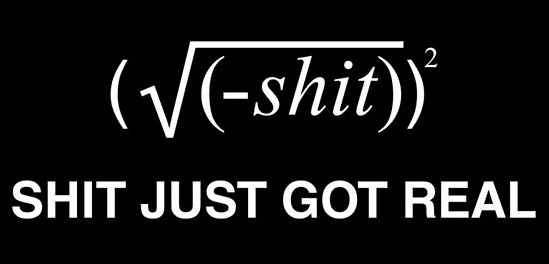

Don’t ever do it. Ever. Just… no.
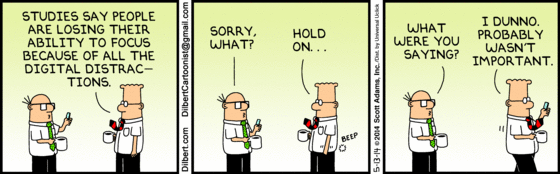
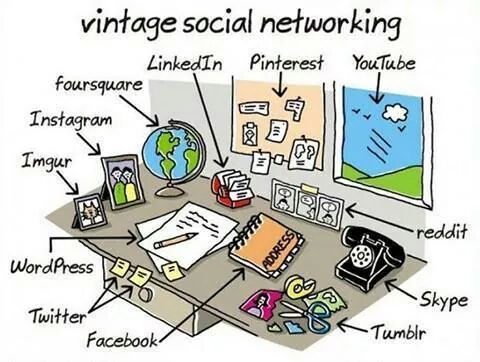
Oh god, this is so me!

Oooooh! Now he gets to wear a t-shirt that says “I’m Gandalf, Magneto and Sherlock! Deal with it!” :D
In recent years the sleuthing of Sherlock Holmes has been depicted as ass-kicking and wisecracking in Guy Ritchie’s movies, and as drily witty and cerebrally thrilling in the BBC TV series starring Benedict Cumberbatch. But now a new, quieter side to Arthur Conan Doyle’s detective is set to reach the screen: his old age, after he retired to keep bees.
Ian McKellen is set to play Holmes in A Slight Trick of the Mind, adapted from the 2005 novel by Mitch Cullin which imagines Holmes’s twilight years, alluded to in Doyle’s novels. The film will depict him working on his final case aged 63, and also retired in Sussex aged 91, mentally frail and obsessed with the unsolved crime. Laura Linney will play his housekeeper, Mrs Munro, whose son Holmes has a fatherly attachment to.
The film will be directed by Bill Condon, who has worked on acclaimed films with each of the actors before: the Oscar-winning Gods and Monsters with McKellen, and his Alfred Kinsey biopic with Linney. “It’s a really great mystery about who Sherlock Holmes is, but it’s also a lovely, delicate movie about what happens as you get older,” Condon told Entertainment Weekly. “I’m looking forward to the combined talent, skills, and smarts [of Linney and McKellen]. Both of them are incredibly detail-oriented and do an amazing amount of work before they get to set, and then they dive off the board and become their characters.”

Brian Shul, “Sled Driver: Flying the World’s Fastest Jet”
So it was with great surprise, when at the end of one of my presentations, someone asked, “what was the slowest you ever flew the Blackbird?” This was a first. After giving it some thought, I was reminded of a story that I had never shared before, and relayed the following.
I was flying the SR-71 out of RAF Mildenhall, England , with my back-seater, Walt Watson; we were returning from a mission over Europe and the Iron Curtain when we received a radio transmission from home base. As we scooted across Denmark in three minutes, we learned that a small RAF base in the English countryside had requested an SR-71 fly-past. The air cadet commander there was a former Blackbird pilot, and thought it would be a motivating moment for the young lads to see the mighty SR-71 perform a low approach. No problem, we were happy to do it. After a quick aerial refueling over the North Sea , we proceeded to find the small airfield.
Walter had a myriad of sophisticated navigation equipment in the back seat, and began to vector me toward the field. Descending to subsonic speeds, we found ourselves over a densely wooded area in a slight haze. Like most former WWII British airfields, the one we were looking for had a small tower and little surrounding infrastructure. Walter told me we were close and that I should be able to see the field, but I saw nothing.
Nothing but trees as far as I could see in the haze. We got a little lower, and I pulled the throttles back from 325 knots we were at. With the gear up, anything under 275 was just uncomfortable. Walt said we were practically over the field—yet; there was nothing in my windscreen. I banked the jet and started a gentle circling maneuver in hopes of picking up anything that looked like a field. Meanwhile, below, the cadet commander had taken the cadets up on the catwalk of the tower in order to get a prime view of the fly-past. It was a quiet, still day with no wind and partial gray overcast.
Walter continued to give me indications that the field should be below us but in the overcast and haze, I couldn’t see it.. The longer we continued to peer out the window and circle, the slower we got. With our power back, the awaiting cadets heard nothing. I must have had good instructors in my flying career, as something told me I better cross-check the gauges. As I noticed the airspeed indicator slide below 160 knots, my heart stopped and my adrenalin-filled left hand pushed two throttles full forward. At this point we weren’t really flying, but were falling in a slight bank. Just at the moment that both afterburners lit with a thunderous roar of flame (and what a joyous feeling that was) the aircraft fell into full view of the shocked observers on the tower
Shattering the still quiet of that morning, they now had 107 feet of fire-breathing titanium in their face as the plane leveled and accelerated, in full burner, on the tower side of the infield, closer than expected, maintaining what could only be described as some sort of ultimate knife-edge pass. Quickly reaching the field boundary, we proceeded back to Mildenhall without incident. We didn’t say a word for those next 14 minutes.
After landing, our commander greeted us, and we were both certain he was reaching for our wings. Instead, he heartily shook our hands and said the commander had told him it was the greatest SR-71 fly-past he had ever seen, especially how we had surprised them with such a precise maneuver that could only be described as breathtaking. He said that some of the cadet’s hats were blown off and the sight of the plan form of the plane in full afterburner dropping right in front of them was unbelievable. Walt and I both understood the concept of “breathtaking” very well that morning, and sheepishly replied that they were just excited to see our low approach.
As we retired to the equipment room to change from space suits to flight suits, we just sat there-we hadn’t spoken a word since “the pass.” Finally, Walter looked at me and said, “One hundred fifty-six knots. What did you see?” Trying to find my voice, I stammered, “One hundred fifty-two.”
We sat in silence for a moment. Then Walt said, “Don’t ever do that to me again!” And I never did.
A year later, Walter and I were having lunch in the Mildenhall Officer’s club, and overheard an officer talking to some cadets about an SR-71 fly-past that he had seen one day. Of course, by now the story included kids falling off the tower and screaming as the heat of the jet singed their eyebrows. Noticing our HABU patches, as we stood there with lunch trays in our hands, he asked us to verify to the cadets that such a thing had occurred. Walt just shook his head and said, “It was probably just a routine low approach; they’re pretty impressive in that plane.” Impressive indeed.
And another good quote:
We listened as the shaky voice of a lone Cessna pilot who asked Center for a read-out of his ground speed. Center replied: “November Charlie 175, I’m showing you at ninety knots on the ground.” Now the thing to understand about Center controllers, was that whether they were talking to a rookie pilot in a Cessna, or to Air Force One, they always spoke in the exact same, calm, deep, professional tone that made one feel important. I referred to it as the “Houston Center voice.” I have always felt that after years of seeing documentaries on this country’s space program and listening to the calm and distinct voice of the Houston controllers, that all other controllers since then wanted to sound like that and that they basically did. And it didn’t matter what sector of the country we would be flying in, it always seemed like the same guy was talking. Over the years that tone of voice had become somewhat of a comforting sound to pilots everywhere. Conversely, over the years, pilots always wanted to ensure that, when transmitting, they sounded like Chuck Yeager, or at least like John Wayne. Better to die than sound bad on the radios.
Just moments after the Cessna’s inquiry, a Twin Beech piped up on frequency, in a rather superior tone, asking for his ground speed in Beech. “I have you at one hundred and twenty-five knots of ground speed.” Boy, I thought, the Beechcraft really must think he is dazzling his Cessna brethren.
Then out of the blue, a navy F-18 pilot out of NAS Lemoore came up on frequency. You knew right away it was a Navy jock because he sounded very cool on the radios. “Center, Dusty 52 ground speed check.” Before Center could reply, I’m thinking to myself, hey, Dusty 52 has a ground speed indicator in that million-dollar cockpit, so why is he asking Center for a read-out? Then I got it, ol’ Dusty here is making sure that every bug smasher from Mount Whitney to the Mojave knows what true speed is. He’s the fastest dude in the valley today, and he just wants everyone to know how much fun he is having in his new Hornet. And the reply, always with that same, calm, voice, with more distinct alliteration than emotion: “Dusty 52, Center, we have you at 620 on the ground.” And I thought to myself, is this a ripe situation, or what? As my hand instinctively reached for the mic button, I had to remind myself that Walt was in control of the radios. Still, I thought, it must be done—in mere seconds we’ll be out of the sector and the opportunity will be lost. That Hornet must die, and die now. I thought about all of our Sim training and how important it was that we developed well as a crew and knew that to jump in on the radios now would destroy the integrity of all that we had worked toward becoming. I was torn.
Somewhere, 13 miles above Arizona, there was a pilot screaming inside his space helmet. Then, I heard it—the click of the mic button from the back seat. That was the very moment that I knew Walter and I had become a crew. Very professionally, and with no emotion, Walter spoke: “Los Angeles Center, Aspen 20, can you give us a ground speed check?” There was no hesitation, and the replay came as if was an everyday request.
“Aspen 20, I show you at one thousand eight hundred and forty-two knots, across the ground.” I think it was the forty-two knots that I liked the best, so accurate and proud was Center to deliver that information without hesitation, and you just knew he was smiling. But the precise point at which I knew that Walt and I were going to be really good friends for a long time was when he keyed the mic once again to say, in his most fighter-pilot-like voice: “Ah, Center, much thanks, we’re showing closer to nineteen hundred on the money.”
For a moment Walter was a god. And we finally heard a little crack in the armor of the Houston Center voice, when L.A. came back with, “Roger that Aspen. Your equipment is probably more accurate than ours. You boys have a good one.” It all had lasted for just moments, but in that short, memorable sprint across the southwest, the Navy had been flamed, all mortal airplanes on freq were forced to bow before the King of Speed, and more importantly, Walter and I had crossed the threshold of being a crew. A fine day’s work. We never heard another transmission on that frequency all the way to the coast. For just one day, it truly was fun being the fastest guys out there.
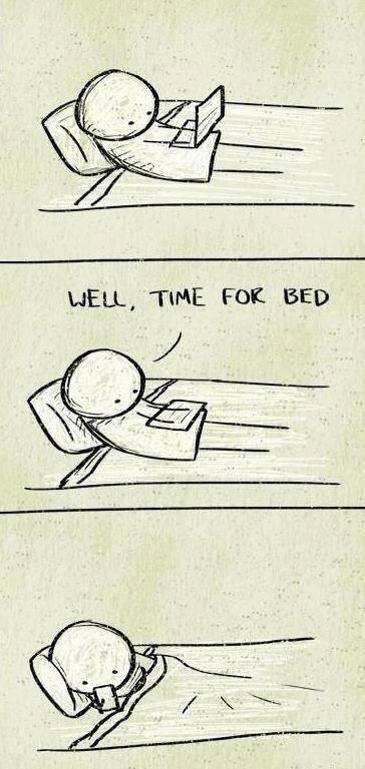
Been there, do that fairly regularly.

Every friend I have with a job that involves picking up something heavier than a laptop more than twice a week eventually finds a way to slip something like this into conversation: “Bro,1 you don’t work hard. I just worked a 4700-hour week digging a tunnel under Mordor with a screwdriver.”
They have a point. Mordor sucks, and it’s certainly more physically taxing to dig a tunnel than poke at a keyboard unless you’re an ant. But, for the sake of the argument, can we agree that stress and insanity are bad things? Awesome. Welcome to programming.
All programming teams are constructed by and of crazy people
Imagine joining an engineering team. You’re excited and full of ideas, probably just out of school and a world of clean, beautiful designs, awe-inspiring in their aesthetic unity of purpose, economy, and strength. You start by meeting Mary, project leader for a bridge in a major metropolitan area. Mary introduces you to Fred, after you get through the fifteen security checks installed by Dave because Dave had his sweater stolen off his desk once and Never Again. Fred only works with wood, so you ask why he’s involved because this bridge is supposed to allow rush-hour traffic full of cars full of mortal humans to cross a 200-foot drop over rapids. Don’t worry, says Mary, Fred’s going to handle the walkways. What walkways? Well Fred made a good case for walkways and they’re going to add to the bridge’s appeal. Of course, they’ll have to be built without railings, because there’s a strict no railings rule enforced by Phil, who’s not an engineer. Nobody’s sure what Phil does, but it’s definitely full of synergy and has to do with upper management, whom none of the engineers want to deal with so they just let Phil do what he wants. Sara, meanwhile, has found several hemorrhaging-edge paving techniques, and worked them all into the bridge design, so you’ll have to build around each one as the bridge progresses, since each one means different underlying support and safety concerns. Tom and Harry have been working together for years, but have an ongoing feud over whether to use metric or imperial measurements, and it’s become a case of “whoever got to that part of the design first.” This has been such a headache for the people actually screwing things together, they’ve given up and just forced, hammered, or welded their way through the day with whatever parts were handy. Also, the bridge was designed as a suspension bridge, but nobody actually knew how to build a suspension bridge, so they got halfway through it and then just added extra support columns to keep the thing standing, but they left the suspension cables because they’re still sort of holding up parts of the bridge. Nobody knows which parts, but everybody’s pretty sure they’re important parts. After the introductions are made, you are invited to come up with some new ideas, but you don’t have any because you’re a propulsion engineer and don’t know anything about bridges.
Would you drive across this bridge? No. If it somehow got built, everybody involved would be executed. Yet some version of this dynamic wrote every single program you have ever used, banking software, websites, and a ubiquitously used program that was supposed to protect information on the internet but didn’t.
All code is bad
Every programmer occasionally, when nobody’s home, turns off the lights, pours a glass of scotch, puts on some light German electronica, and opens up a file on their computer. It’s a different file for every programmer. Sometimes they wrote it, sometimes they found it and knew they had to save it. They read over the lines, and weep at their beauty, then the tears turn bitter as they remember the rest of the files and the inevitable collapse of all that is good and true in the world.
This file is Good Code. It has sensible and consistent names for functions and variables. It’s concise. It doesn’t do anything obviously stupid. It has never had to live in the wild, or answer to a sales team. It does exactly one, mundane, specific thing, and it does it well. It was written by a single person, and never touched by another. It reads like poetry written by someone over thirty.
Every programmer starts out writing some perfect little snowflake like this. Then they’re told on Friday they need to have six hundred snowflakes written by Tuesday, so they cheat a bit here and there and maybe copy a few snowflakes and try to stick them together or they have to ask a coworker to work on one who melts it and then all the programmers’ snowflakes get dumped together in some inscrutable shape and somebody leans a Picasso on it because nobody wants to see the cat urine soaking into all your broken snowflakes melting in the light of day. Next week, everybody shovels more snow on it to keep the Picasso from falling over.
There’s a theory that you can cure this by following standards, except there are more “standards” than there are things computers can actually do, and these standards are all variously improved and maligned by the personal preferences of the people coding them, so no collection of code has ever made it into the real world without doing a few dozen identical things a few dozen not even remotely similar ways. The first few weeks of any job are just figuring out how a program works even if you’re familiar with every single language, framework, and standard that’s involved, because standards are unicorns.

There will always be darkness
I spent a few years growing up with a closet in my bedroom. The closet had an odd design. It looked normal at first, then you walked in to do closet things, and discovered that the wall on your right gave way to an alcove, making for a handy little shelf. Then you looked up, and the wall at the back of the alcove gave way again, into a crawlspace of utter nothingness, where no light could fall and which you immediately identified as the daytime retreat for every ravenous monster you kept at bay with flashlights and stuffed animals each night.
This is what it is to learn programming. You get to know your useful tools, then you look around, and there are some handy new tools nearby and those tools show you the bottomless horror that was always right next to your bed.
For example, say you’re an average web developer. You’re familiar with a dozen programming languages, tons of helpful libraries, standards, protocols, what have you. You still have to learn more at the rate of about one a week, and remember to check the hundreds of things you know to see if they’ve been updated or broken and make sure they all still work together and that nobody fixed the bug in one of them that you exploited to do something you thought was really clever one weekend when you were drunk. You’re all up to date, so that’s cool, then everything breaks.
“Double you tee eff?” you say, and start hunting for the problem. You discover that one day, some idiot decided that since another idiot decided that 1/0 should equal infinity, they could just use that as a shorthand for “Infinity” when simplifying their code. Then a non-idiot rightly decided that this was idiotic, which is what the original idiot should have decided, but since he didn’t, the non-idiot decided to be a dick and make this a failing error in his new compiler. Then he decided he wasn’t going to tell anyone that this was an error, because he’s a dick, and now all your snowflakes are urine and you can’t even find the cat.
You are an expert in all these technologies, and that’s a good thing, because that expertise let you spend only six hours figuring out what went wrong, as opposed to losing your job. You now have one extra little fact to tuck away in the millions of little facts you have to memorize because so many of the programs you depend on are written by dicks and idiots.
And that’s just in your own chosen field, which represents such a tiny fraction of all the things there are to know in computer science you might as well never have learned anything at all. Not a single living person knows how everything in your five-year-old MacBook actually works. Why do we tell you to turn it off and on again? Because we don’t have the slightest clue what’s wrong with it, and it’s really easy to induce coma in computers and have their built-in team of automatic doctors try to figure it out for us. The only reason coders’ computers work better than non-coders’ computers is coders know computers are schizophrenic little children with auto-immune diseases and we don’t beat them when they’re bad.
A lot of work is done on the internet and the internet is its own special hellscape
Remember that stuff about crazy people and bad code? The internet is that except it’s literally a billion times worse. Websites that are glorified shopping carts with maybe three dynamic pages are maintained by teams of people around the clock, because the truth is everything is breaking all the time, everywhere, for everyone. Right now someone who works for Facebook is getting tens of thousands of error messages and frantically trying to find the problem before the whole charade collapses. There’s a team at a Google office that hasn’t slept in three days. Somewhere there’s a database programmer surrounded by empty Mountain Dew bottles whose husband thinks she’s dead. And if these people stop, the world burns. Most people don’t even know what sysadmins do, but trust me, if they all took a lunch break at the same time they wouldn’t make it to the deli before you ran out of bullets protecting your canned goods from roving bands of mutants.
You can’t restart the internet. Trillions of dollars depend on a rickety cobweb of unofficial agreements and “good enough for now” code with comments like “TODO: FIX THIS IT’S A REALLY DANGEROUS HACK BUT I DON’T KNOW WHAT’S WRONG” that were written ten years ago. I haven’t even mentioned the legions of people attacking various parts of the internet for espionage and profit or because they’re bored. Ever heard of 4chan? 4chan might destroy your life and business because they decided they didn’t like you for an afternoon, and we don’t even worry about 4chan because another nuke doesn’t make that much difference in a nuclear winter.
On the internet, it’s okay to say, “You know, this kind of works some of the time if you’re using the right technology,” and BAM! it’s part of the internet now. Anybody with a couple of hundred dollars and a computer can snag a little bit of the internet and put up whatever awful chunks of hack code they want and then attach their little bit to a bunch of big bits and everything gets a little bit worse. Even the good coders don’t bother to learn the arcane specifications outlined by the organizations people set up to implement some unicorns, so everybody spends half their time coping with the fact that nothing matches anything or makes any sense and might break at any time and we just try to cover it up and hope no one notices.
Here are the secret rules of the internet: five minutes after you open a web browser for the first time, a kid in Russia has your social security number. Did you sign up for something? A computer at the NSA now automatically tracks your physical location for the rest of your life. Sent an email? Your email address just went up on a billboard in Nigeria.
These things aren’t true because we don’t care and don’t try to stop them, they’re true because everything is broken because there’s no good code and everybody’s just trying to keep it running. That’s your job if you work with the internet: hoping the last thing you wrote is good enough to survive for a few hours so you can eat dinner and catch a nap.
We didn’t start out crazy, we’re being driven crazy
Funny, right? No? How about this exchange:
Wasn’t that guy helpful? With the camel? Doesn’t that seem like an appropriate response? No? Good. You can still find Jesus. You have not yet spent so much of your life reading code that you begin to talk in it. The human brain isn’t particularly good at basic logic and now there’s a whole career in doing nothing but really, really complex logic. Vast chains of abstract conditions and requirements have to be picked through to discover things like missing commas. Doing this all day leaves you in a state of mild aphasia as you look at people’s faces while they’re speaking and you don’t know they’ve finished because there’s no semicolon. You immerse yourself in a world of total meaninglessness where all that matters is a little series of numbers went into a giant labyrinth of symbols and a different series of numbers or a picture of a kitten came out the other end.
The destructive impact on the brain is demonstrated by the programming languages people write. This is a program:
int main( int argc, char** argv ) {
std::cout << "Hello World!" << std::endl;
return 0;
}
That program does exactly the same thing as this program:
And this program:
And this one:
And once somebody wrote a programming language that let somebody else write this:
According to the author, that program is “two lines of code that parse two lines of embedded comments in the code to read the Mayan numbers representing the individual ASCII characters that make up the magazine title, rendered in 90-degree rotated ASCII art.”
That program won a contest, because of course it did. Do you want to live in a world like this? No. This is a world of where you can smoke a pack a day and nobody even questions it. “Of course he smokes a pack a day, who wouldn’t?” Eventually every programmer wakes up and before they’re fully conscious they see their whole world and every relationship in it as chunks of code, and they trade stories about it as if sleepiness triggering acid trips is a normal thing that happens to people. This is a world where people eschew sex to write a programming language for orangutans. All programmers are forcing their brains to do things brains were never meant to do in a situation they can never make better, ten to fifteen hours a day, five to seven days a week, and every one of them is slowly going mad.
</rant>
So no, I’m not required to be able to lift objects weighing up to fifty pounds. I traded that for the opportunity to trim Satan’s pubic hair while he dines out of my open skull so a few bits of the internet will continue to work for a few more days.