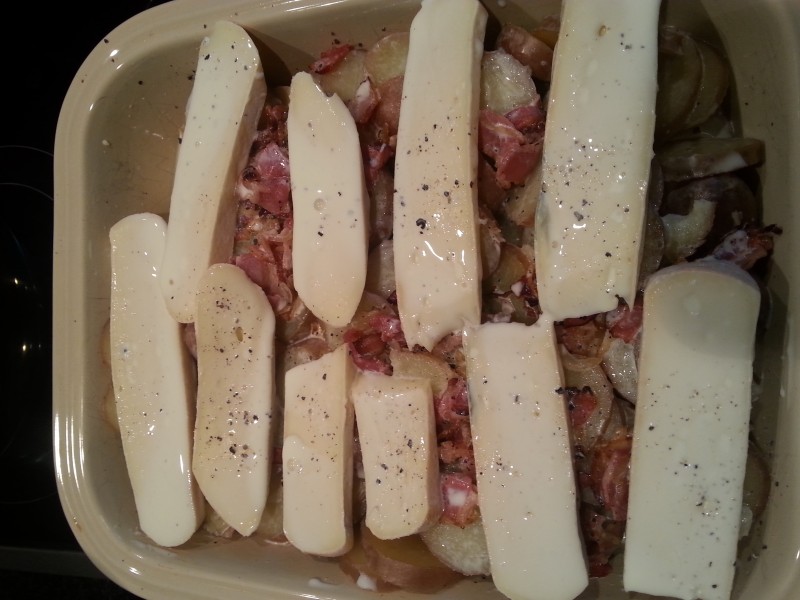
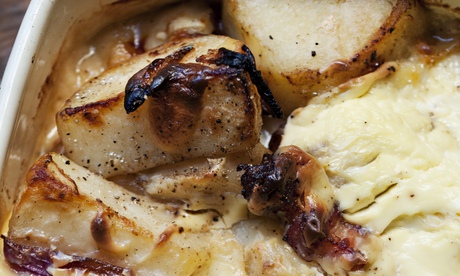
I made tartiflette. It’s horrendously bad for you, but tastes sooooo nice :-)

The beaver is a proud and noble animal
Notes from a bemused canuck
I made tartiflette. It’s horrendously bad for you, but tastes sooooo nice :-)
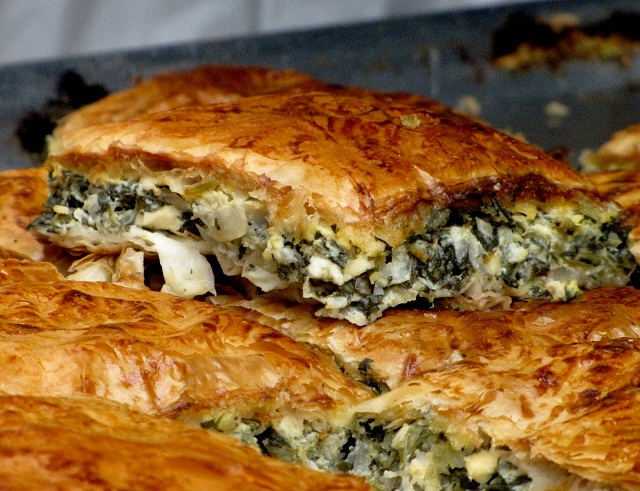
Stavros was a contractor we had for 6 months at the NIHS. He made this for the xmas potluck and promised to send the recipe. He has sent the most detailed set of cooking instructions I have ever seen, and I can’t wait to try it! The text below is taken from the PDF he sent, with full color step-by-step illustrations :)
Ingredients
-‐ 500gr Spinach
-‐ 2+1 eggs
-‐ 200‐250gr. Feta
-‐ 1 yogurt
-‐ 1 cream fraiche (~ 250ml)
-‐ 1 tsp of honey
-‐ 2-‐3 fresh onions
-‐ 1 big leek or 2 small
-‐ Dill
-‐ pâte feuilletée
-‐ 1 tsp. of salt
-‐ 4 tbs flour
-‐ 1 small glass of olive oil
-‐ 50g butter (optional)
-‐ White wine
Step 1: Prepare the spinach
Try to find baby spinach with small leaves. If you can’t find baby spinach, it is better to remove the stems from spinach leaves (fold each leaf in half, then with your hand pull the stem towards the top of the leaf). It will take years
Put the spinach into boiling water for about 5‐10 mins. Place it into a pasta strainer and let it get back to a normal temperature (~20mins).
Take a handful of spinach. Squeeze the spinach between your hands roughly, so it drains out. SQUEEZE IT REALLY HARD for 2-‐3 mins. It might take you about 15 mins to drain completely all of the spinach. This step is important because you don’t want to end up eating a spinach soup.
Step 2: Stir-fry
Chop the onions and cut the leeks like in small slices. Cut the drill and set aside. Put some olive oil in a pot and heat the stovetop to maximum. Drop in the pot the leeks and the onions. Let them stir-fry for a while (for 5 mins) stirring frequently. Drop the drill in the pot and keep stirring for 5 more mins. At the end add a small glass of white wine and let the alcohol evaporate.
Step 3: Mix In a big bowl:
-‐ Crumble the Feta
-‐ Add
o The eggs
o Cream fraiche
o Olive oil
o The mix from step 2
o Honey
o Salt
o Yogurt
o And the drained spinach
o Butter (melt in the microwave for 30 sec)
Mix very-‐very well with your hand. Add the flour and mix again
Step 4: Cooking Pan
Take a pastry brush and spread some oil on it. Unroll the pâte feuilletée but do not remove the paper. Place the pâte into the baking pan with the paper on it. Then remove slowly the paper. With your hands carefully lay the pastry to take the shape of the baking pan and gently lift the sides. The olive oil helps to do this smoothly. With a spoon spread the mix on the pastry. Over the mix place the next pâte with the paper and remove it slowly as you did before. With a knife close the edges. With a fork open small holes over the pâte. Brush with an egg. Brushing the pastry top with a little beaten egg will give you a golden color and help it crisp up
Step 5: Oven
Ensure the oven is preheated to 200C. Bake for 45 mins until the pastry is brown and crispy. Enjoy!
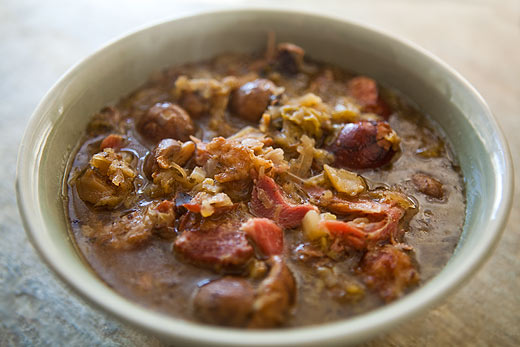
INGREDIENTS
50g dried porcini or other wild mushrooms
2 Tbsp bacon fat or vegetable oil
1kg pork shoulder, cubed
1 large onion, chopped
1 head cabbage (regular, not savoy or red), chopped
750g pounds mixed fresh mushrooms
500g kielbasa or other smoked sausage
1 smoked ham hock
500g fresh Polish sausage (optional)
1 medium tin chopped tomatoes
1 bottle of pilsner or lager beer
1 Tbsp juniper berries (optional)
1 Tbsp black peppercorns
1 Tbsp caraway seeds
2 Tbsp dried marjoram
Salt
2 Tbsp tomato paste (optional)
1-2 Tbsp mustard or horseradish (optional)
METHOD
1 Pour hot tap water over the dried mushrooms and submerge them for 20-40 minutes, or until soft. Grind or crush the juniper berries and black peppercorns roughly; you don’t want a powder. Cut the pork shoulder into large chunks, about 2 inches. Cut the sausages into similar-sized chunks. Clean off any dirt from the mushrooms and cut them into large pieces; leave small ones whole.
2 Heat the bacon fat or vegetable oil in a large lidded pot for a minute or two. Working in batches if necessary, brown the pork shoulder over medium-high heat. Do not crowd the pan. Set the browned meat aside.
3 Put the onion and fresh cabbage into the pot and sauté for a few minutes, stirring often, until the cabbage is soft. Sprinkle a little salt over them. The vegetables will give off plenty of water, and when they do, use a wooden spoon to scrape any browned bits off the bottom of the pot. Add the tomato paste. Once the pot is clean and the cabbage and onions soft, remove from the pot and set aside with the pork shoulder.
4 Add the mushrooms and cook them without any additional oil, stirring often, until they release their water. Once they do, sprinkle a little salt on the mushrooms. When the water is nearly all gone, add back the pork shoulder, the cabbage-and-onion mixture, and then everything else. Add the beer and chopped tomatoes. Stir well to combine.
5 You should not have enough liquid to submerge everything. That’s good: Bigos is a “dry” stew, and besides, the ingredients will give off more liquid as they cook. Bring everything to a simmer, cover the pot and cook gently for at least 2 hours.
6 Bigos is better the longer it cooks, but you can eat it once the ham hock falls apart. Check at 2 hours, and then every 30 minutes after that. When the hock is tender, fish it out and pull off the meat and fat from the bones Discard the bones and the fat, then chop the meat roughly and return to the pot.
Bigos is best served simply, with rye bread and a beer. If you want a little kick, add the mustard or horseradish right before you eat it. Bigos improves with age, too, which is why this recipe makes so much: Your leftovers will be even better than the stew was on the first day.
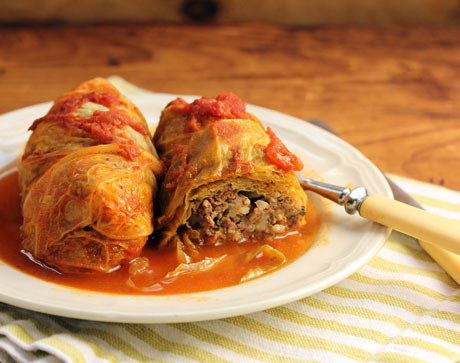
Adapted from several recipes found online
Ingredients
1 head Savoy cabbage (3-4 lbs)
1 Tbsp olive oil
1 small onion, minced
1 small carrot, shredded (on a box grater)
1 stalk celery, minced
1-1/4 lb lean ground beef or turkey
2/3 cup cooked long-grain white rice
2 Tbsp tomato paste
2 Tbsp chopped fresh flat-leaf parsley
1 tsp kosher salt
1 tsp fresh black pepper
1/2 cup canned chopped tomato
1L tomato juice
Directions
Cut the core out of the cabbage, and leave it whole. Bring a large pot of water to a boil. Submerge the cabbage, core side up, in the boiling water. Reduce heat to low, and simmer for 10-15 minutes. (Hint: if the cabbage floats to the top, set a small ceramic plate on top to keep the ribs of the cabbage leaves under water.)
While the cabbage is in the pot, heat the oil in a large Dutch oven or deep pan (the one you’ll use for cooking the cabbage rolls — I use a 12-inch straight-sided pot, with a lid). Sauté the onion, carrot and celery until the vegetables are soft, 2-3 minutes. Scrape the mixture into a large mixing bowl and set it aside to cool.
Remove the cabbage from the hot water, and carefully peel off the outer leaves (you’ll need 18 leaves, or fewer if some of the leaves are large enough to be cut in half). Work with one leaf at a time. Dry each leaf with paper towels. Place the leaf cupped side down on the counter. With a very sharp paring knife, slice off the hardest part of the center rib (or, you can cut it out, and overlap the two flaps of the cabbage leaf to fill the gap). Pile up the whole, trimmed leaves; chop the remaining cabbage into 1-inch pieces, and layer them in the bottom of your cooking pan.
Add to the mixing bowl with the sautéed vegetables the ground beef, cooked rice, tomato paste, parsley, salt and pepper. Mix well (with your hands).
Set one of the cabbage leaves on the counter, cupped side facing up. (If you’ve cut the rib away, overlap the two flaps of the leaf.) Make a small log out of 2-3 tablespoons of the meat filling, and set it at the end of the leaf closest to you. If you’ve ever made eggrolls, you know what to do next. Fold up the bottom of the leaf over the mixture. Then fold in both sides, and roll the leaf to cover all of the filling. Place the rolled, filled cabbage leaf in the pot, on top of the chopped cabbage.
Continue with the remaining leaves and remaining meat mixture. Pack the leaves into the pot tightly; you’ll need to make two layers.
Sprinkle the chopped tomato over the cabbage rolls, and pour in the tomato juice to cover. If the juice doesn’t cover, add some beef broth or water so that the rolls are almost covered, but not totally submerged.
Bring the liquid to a boil over high heat. Then, cover the pot and reduce the heat to low. Cook for 45 minutes (check midway through; if the liquid in the pot is boiling, reduce heat to simmer).
Let the cabbage rolls cool for 5-10 minutes before serving, or let cool completely and refrigerate or freeze. Save any extra braising liquid and the chopped cabbage from the base of the pot — it’s the perfect start to a wonderful soup.
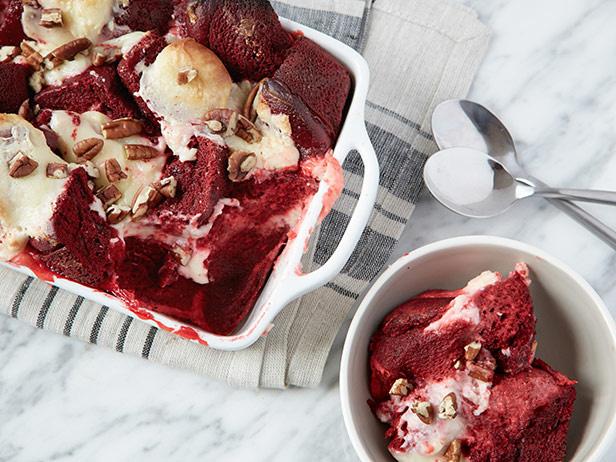
Ingredients
1/3 cup vegetable oil, plus more for greasing pan
One 16.5-ounce box red velvet cake mix
8 large eggs plus 2 large egg yolks
12 ounces cream cheese, softened
4 tablespoons unsalted butter, softened, plus more for greasing dish
1 cup confectioners’ sugar
1 tablespoon plus 1 teaspoon pure vanilla extract
Fine salt
4 cups whole milk
1/4 cup granulated sugar
Directions
Preheat the oven to 350F. Generously oil a 12-cup muffin pan.
Combine the cake mix, oil, 3 of the eggs and 1 cup water until smooth; divide among the muffin cups. Bake until a tester comes out clean, about 18 minutes. Cool in the pan for 5 minutes, then cool completely on a wire rack.
Meanwhile, beat the cream cheese, butter, confectioners’ sugar, 1 teaspoon of the vanilla and a pinch of salt in the bowl of a stand mixer fitted with a paddle attachment (or in a large bowl if using a hand mixer) until smooth.
Whisk the milk, egg yolks, granulated sugar, remaining 5 eggs and 1 tablespoon vanilla, and a pinch of salt in a large bowl until smooth.
Butter a shallow 3-quart baking dish. Cut the cupcakes in quarters and scatter half over the bottom of the dish. Dollop half the frosting over the cupcakes, then pour in half the custard mixture. Repeat the layering once. Cover and refrigerate at least 1 hour or overnight.
When ready to bake, preheat the oven to 350F. Uncover the bread pudding and bake until the top is golden brown and the center is set, about 1 hour. Cool completely on a wire rack.
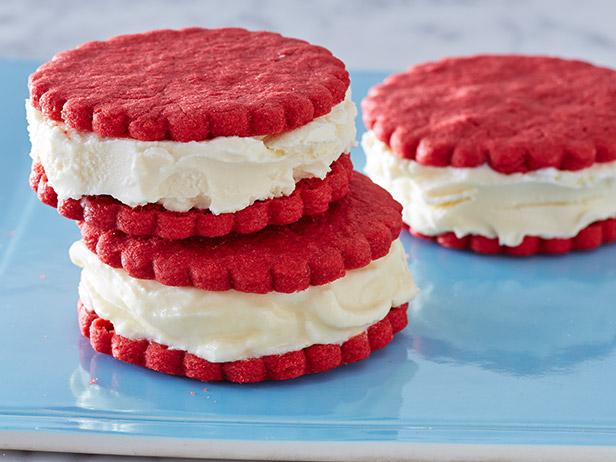
Ingredients
1 1/4 cups all-purpose flour, plus more for rolling
1 1/2 teaspoons unsweetened cocoa powder
1/4 teaspoon baking soda
Fine salt
6 tablespoons unsalted butter, softened
1/2 cup plus 2 tablespoons sugar
1 large egg yolk
1 1/2 teaspoons red food coloring
1 teaspoon pure vanilla extract
2 pints vanilla ice cream
Directions
Sift the flour, cocoa powder, baking soda and 1/8 teaspoon salt into a medium bowl.
Beat the butter and granulated sugar in the bowl of a stand mixer fitted with a paddle attachment (or a large bowl if using a hand mixer) on medium speed just until combined. Beat in the egg yolk just until combined. Beat in the food coloring and vanilla until the color is evenly distributed, scraping down the bowl as needed. Reduce the mixer speed to low and gradually add the flour mixture. Beat just until the dough comes together. Form the dough into two 1-inch-thick disks, wrap tightly in plastic and refrigerate until firm, about 2 hours.
Preheat the oven to 350F. Line two baking sheets with parchment paper.
Lightly dust a sheet of parchment paper with flour. Unwrap one disk, place it on the paper and cover with a large sheet of plastic wrap. Roll the dough out to 1/8 inch thick. Peel off the plastic wrap and, using a 2 1/2-inch round or square cookie or biscuit cutter, cut out the dough. Place the cut-outs on the prepared baking sheets, spacing them 1 inch apart (about 12 cookies per sheet). Gather the scraps, chill until firm, roll again and cut. Repeat with the remaining disk.
Bake the cookies until brick-red and set, 8 to 10 minutes, rotating the baking sheets halfway through. Let the cookies cool on the sheets for 3 minutes, then transfer to a wire rack to cool completely.
Line a rimmed baking sheet with parchment. Scoop a generous 1/4 cup ice cream into a 2 1/2-inch round or square cookie or biscuit cutter set on the parchment. Smooth the top flat and remove the cutter. Repeat with the remaining ice cream to form 12 to 14 disks or squares, spaced evenly apart. Freeze until firm, about 2 hours.
Place 1 portion of ice cream on 1 cookie and top with another cookie. Trim off any ragged edges of ice cream. Repeat with the remaining cookies and ice cream. Freeze for at least 4 hours or overnight.
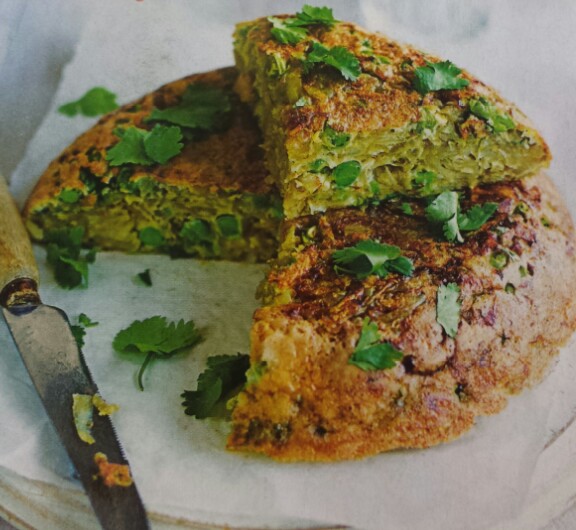
2 tbsp vegetable oil
2 onions, thinly sliced
2 tsp mild curry powder (*)
450g potatoes, coarsely grated and any excess liquid squeezed out
6 medium eggs, beaten
100g frozen peas
small bunch coriander, roughly chopped
1. Heat oven to 200C/180C Fan/gas 6
2. Heat oil in an ovenproof frying pan and fry onions for about 10 minutes over medium heat, until golden. Add curry powder and cook for 1 min.
3. Add grated potatoes and cook for 5-8 minutes, stirring occasionally. You want the potatoes to soften, but also catch a little and turn golden in patches.
4. Season the eggs, then pour into the pan with peas and most of the coriander, swirling to coat the potato mixture. Cook for 1 min more, then transfer to the oven for 10 mins until the eggs have set.
5. Sprinkle with remaining coriander and serve with chutney, natural yogurt and naan bread.
Homemade mild curry powder
2 tablespoons ground cumin
2 tablespoons ground coriander
1 teaspoons ground turmeric
1/2 teaspoon crushed red chili
1/2 teaspoon mustard seed
1/2 teaspoon ground ginger
1/2 teaspoon ground fenugreek
4 large jacket potatoes
1 cup shredded mozzarella cheese
1/2 cup very finely chopped green peppers
1/2 cup very finely chopped mushrooms
1/2 of MEAT (bacon, crumbled sausage, shredded chicken, whatever)
1/2 cup pizza sauce (or more, depending on your preference)
Preheat oven to 200C.
Poke holes in potatoes with a fork and bake for about an hour. Remove from the oven and let cool.
Once cool, slice around the inside of the potato and scoop out the flesh, be careful not to poke holes in the bottom (it’s okay if you do – it happens!). Put scooped potatoes in a bowl and mix with 1/2 cup mozzarella and 2 tablespoons each of peppers, mushrooms and meat. Mix well. Scoop mixture back into potatoes and spoon pizza sauce over top. Add more toppings and cheese. Bake for 10-15 more minutes.
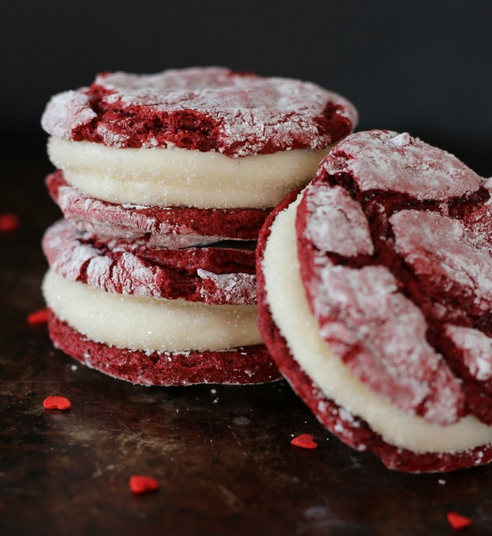
Ingredients
Cookies:
1 box red velvet cake mix
2 eggs
1/3 cup oil
1 1/2 tsp. vanilla extract
1/2 cup powdered sugar
Cream Cheese Filling:
4 oz. cream cheese, softened
1/4 cup butter, softened
1 tsp. vanilla extract
3-4 cup powdered sugar
Directions
1. Preheat oven to 375 degrees and line two cookie sheets with parchment paper.
2. In a large bowl, combine cake mix, eggs, oil and vanilla extract. Mix well until smooth.
3. Roll the dough into balls (about 1 1/2 inches). (Dough will be gooey)
4. Drop into powdered sugar and cover with the sugar, then place on the cookie sheet, 3 inches away from other dough balls.
5. Bake for 7-10 minutes. Watch for the cookies to puff up a bit and form cracks along the top, then take them out of the oven and let them rest on the cookies sheet for a couple of minutes.
6. Remove the cookies to a wire rack and let them cool completely.
7. Make the filling: Beat cream cheese and butter until smooth. Add vanilla and slowly add powdered sugar until you reach your desired consistency.
8. Pipe onto the bottom of half the cookies, sandwich with another cookie and then roll in coarse sugar to decorate.
floury potatoes 600g
Jerusalem artichokes 400g
smoked lardons or pancetta 250g
olive oil a little
red onions 2, sliced
crème fraîche 300ml
reblochon 350g
Peel the potatoes and artichokes then steam or boil them in deep, salted water until tender. They take roughly the same time, so you can cook them together. Drain and cut each one into thick slices. Don’t worry if they crumble a little. Cut the pancetta into short, thick pieces. Heat the oven to 180C/gas mark 4.
Warm the olive oil in a shallow pan, add the lardons or pancetta and cook over a moderate heat with the occasional stir, until the fat is golden. Transfer the pancetta to a plate, leaving behind the oil and fat. Peel the onions, then slice thickly. Add them to the oil and pancetta fat and cook for 10 minutes, until pale gold and soft.
Put the sliced potatoes and artichokes in the pan with the softened onions, and continue cooking for 3 or 4 minutes, shaking the pan occasionally, until they have coloured lightly here and there. Stir in the cooked pancetta.
Cut the reblochon into thick slices. Spoon a layer of the potato, onion and bacon into a dish, add a few slices of reblochon then more potato mixture. Finish with spoonfuls of the crème fraîche and, if you wish, a fine grating of parmesan.
Bake the tartiflette for about 40 minutes until bubbling.