Skip to content
The beaver is a proud and noble animal

The beaver is a proud and noble animal

Notes from a bemused canuck

  • Home
  • About
  • Bookmarks
  • Pictures
  • Resume
  • Wine
  • Random Recipe
  • Toggle search form

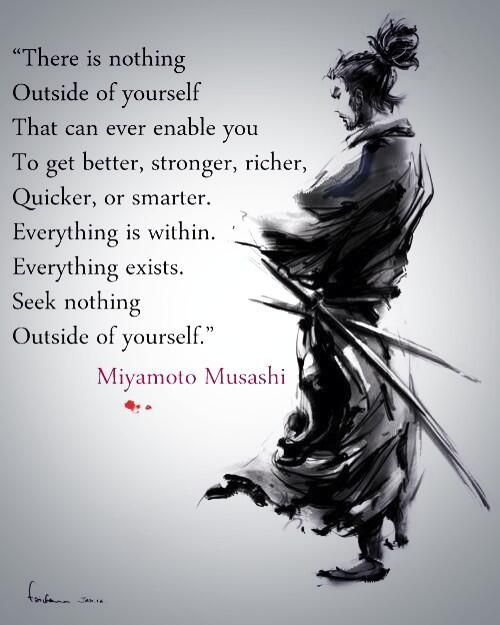
Musashi, The Undefeated Samurai

Posted on June 19, 2017June 28, 2017 By admin

Miyamoto Musashi was three hours late. This was his way. On the beach the tension in the air was palpable. Sasaki Kojiro paced up and down on the fine sand with his hands behind his back. His wrath was rising with the sun, and with every passing minute he felt the insult to his honour growing. The date was the 13th of April, 1612.

Kojiro was considered one of the greatest Samurai in Japan. He was famous throughout the land for his speed and precision, which was made even more remarkable by his preferred weapon. He wielded a huge nodachi blade, a curved Japanese sword in the classic style, but with a blade over a meter in length. The size and weight of the nodachi made it a brutal, unsubtle weapon, but Kojiro had perfected its use to a degree unheard of in all Japan. His fame had grown with his skill, and eventually, he came to the attention of Miyamoto Musashi.

Musashi was a Ronin, a masterless Samurai. He had killed his first opponent in single combat at the age of thirteen and had gone on to win duel after duel as he travelled Japan and honed his skills. In Japan at the time, it was not unusual to challenge others to duel, even to the death, for no other reason that to display one’s mastery. Musashi was no exception. His talent was so great that, by the age of thirty, he had sheathed his two katana, and made a point of duelling only with bokken – wooden practice swords – no matter what weapon his enemy chose to use.

Kojiro’s retinue consisted of body servants, friends, students, cooks, and a clutch of officials who had come to witness the event and report back to the daimyo. They had arrived by boat in the early morning, and the servants had raised a shade for the officials further up the beach. A small fire had been started, food and tea prepared, and all made ready for the great Samurai to meet his opponent. The duel had been arranged through an intermediary at Miyamoto’s request, and the date and time set by him.

Kojiro had arrived three hours early, and as dawn slowly broke and his servants busied themselves with setting up camp, he had sat in profound meditation some way away, mentally preparing himself for combat. He rose some time before his opponent was due to arrive and took a little tea, making polite conversation with the officials, and joking with his friends. His composure was sublime, and his retinue, students and hangers-on had no doubt that he would make short work of his challenger.

Three hours later, however, the morning was wearing on into the afternoon, and Kojiro was no longer composed. He paced, he grumbled, he swore and snapped at his servants, and it was clear to those who watched him that his rage at his challenger’s insulting behaviour was building to a dangerous degree. In an attempt to placate him, one of the officials had suggested that Musashi would not arrive, and had fled the duel in terror at the prospect of facing the great Kojiro, but Kojiro did not accept this. He knew Musashi’s reputation as a swordsman. This behaviour could only be intended to insult.

In fact, Miyamoto was not far away. He sat cross-legged in a little fishing boat that bobbed gently on the tide in a small inlet to the south of the beach where the enraged Kojiro paced. The bottom of the boat was piled with curled wood shavings, as the sword master unhurriedly worked at a long piece of wood with his knife. Also occupying the boat was its owner, an elderly, wrinkled, sun-browned fisherman, who had been paid handsomely to put himself, his boat and his spare oar at Musashi’s service for the day.

This spare oar was now sitting on Musashi’s lap, and with his sharp knife, the Samurai had carefully spent the morning bringing a new shape out of it. It was long and had become gracefully curved and perfectly balanced: a bokken of the finest workmanship. Musashi watched the sun as he worked. He was a strange-looking person. He wore no finery, just a simple robe and sword belt. His feet were bare, and his eyes had a protruding, staring quality that was unnerving. His hair was tied into a simple, functional bun at the top of his head. There were several days growth of beard on his pale and bony face, and his skin was covered with many small, livid scars.

It was clear on close inspection that he had not washed for some time, and his plain robe bore many stains and discoloured patches. Altogether he cut a most disreputable figure, very different from the ostentatious displays of wealth and arms favoured by many Samurai of the time. The only part of his attire that seemed well cared for was the paired katana at his belt. The polished dark wood of their sheaths gleamed in the morning sun. With a quiet word, Musashi asked the fisherman to take them round to the beach where Kojiro waited. The fisherman obeyed, and together they rowed out to sea a little, before turning back to approach the beach.

At first, Kojiro did not recognise his opponent. Musashi sat low and forward in the little boat, his weapons hidden, seeming deep in thought.

“It’s him!” cried one of the servants, who had run down to the water line. “Musashi comes to the duel!”

The blood drained from Kojiro’s face as Musashi slowly stood up in the boat. The insolence, it was unheard of. This was no way for a Samurai to behave! To arrive so late was bad enough, but to arrive like this… Unshaven, filthy, in dishevelled clothing and with no retinue but a beggarly old fisherman; Kojiro felt the insult to his honour most keenly, and the wrath that had been slowly building all morning boiled over. He trembled with rage and held out one hand to the sword bearer who rushed up to present him with his great nodachi.

The huge sword flashed in the sun as Kojiro charged down the beach toward his opponent. He focussed his anger to a fine point, which ran through his arms and hands and settled at the cruel tip of the blade. In his mind, where a moment ago there had been great anger, now there was silence. But what was this? Musashi leapt into the surf and dashed to the left, but he drew no blade; his only weapon was a wooden bokken, similar in size and reach to Kojiro’s sword. Kojiro faltered for a split second.
What could this mean? The arrogance of the man who would challenge the great Kojiro with a wooden practice sword was incomprehensible. He turned to follow Musashi and dived in with a great sweep of his blade. The insolent man ducked just in time to avoid the blow. The nodachi swept only centimetres above his head. A little cloud of black hair floated in the still air.

Then Musashi was in underneath his guard. The bokken was rising, but the huge nodachi was in the hands of a master, and Kojiro did not back away. He brought his sword whistling down upon his opponent… but Musashi was gone. He had stepped step to the right, and his bokken hit flesh. Kojiro’s breath went out of him, and his next blow went wild. The wooden sword dealt him a stunning blow on the side of the head and in the moment that he staggered, his enemy’s weapon smashed into his left side with incredible force. He felt his ribs crack, followed by a terrible, sharp pain deep inside his chest. He couldn’t breathe, and the world swam before his eyes.

The officials, staff and servants watched in horror as Sasaki Kojiro toppled forward onto the sand. The engagement had been over in seconds, and the victorious Samurai was now bowing low to his downed opponent, then toward them. He watched them for a moment, poised, then began to retreat swiftly toward the boat. There was a ring of steel and a yell as a number of Kojiro’s friends, and students drew their swords and ran down the beach toward Musashi, but he was in the surf, he was in the boat, he was gone. His purpose on Ganryu island was fulfilled, but tears fell from his strange eyes as the old fisherman rowed them away.

Miyamoto Mushashi was victorious, but he had destroyed one of the greatest warriors in the land, and the pointlessness of the act hit him as hard as his own death-blow had hit Kojiro. There was nothing gained by his victory, and everything lost. Like Mushashi’s bokken, Kojiro’s skill had been slowly carved out of the raw material of his life. Now he was gone, but his death had served no purpose.

Musashi continued to study and teach the art of swordsmanship throughout his life, but he never again killed an opponent in a duel.

Original link

uncategorized

The world of meat

Posted on June 18, 2017 By admin

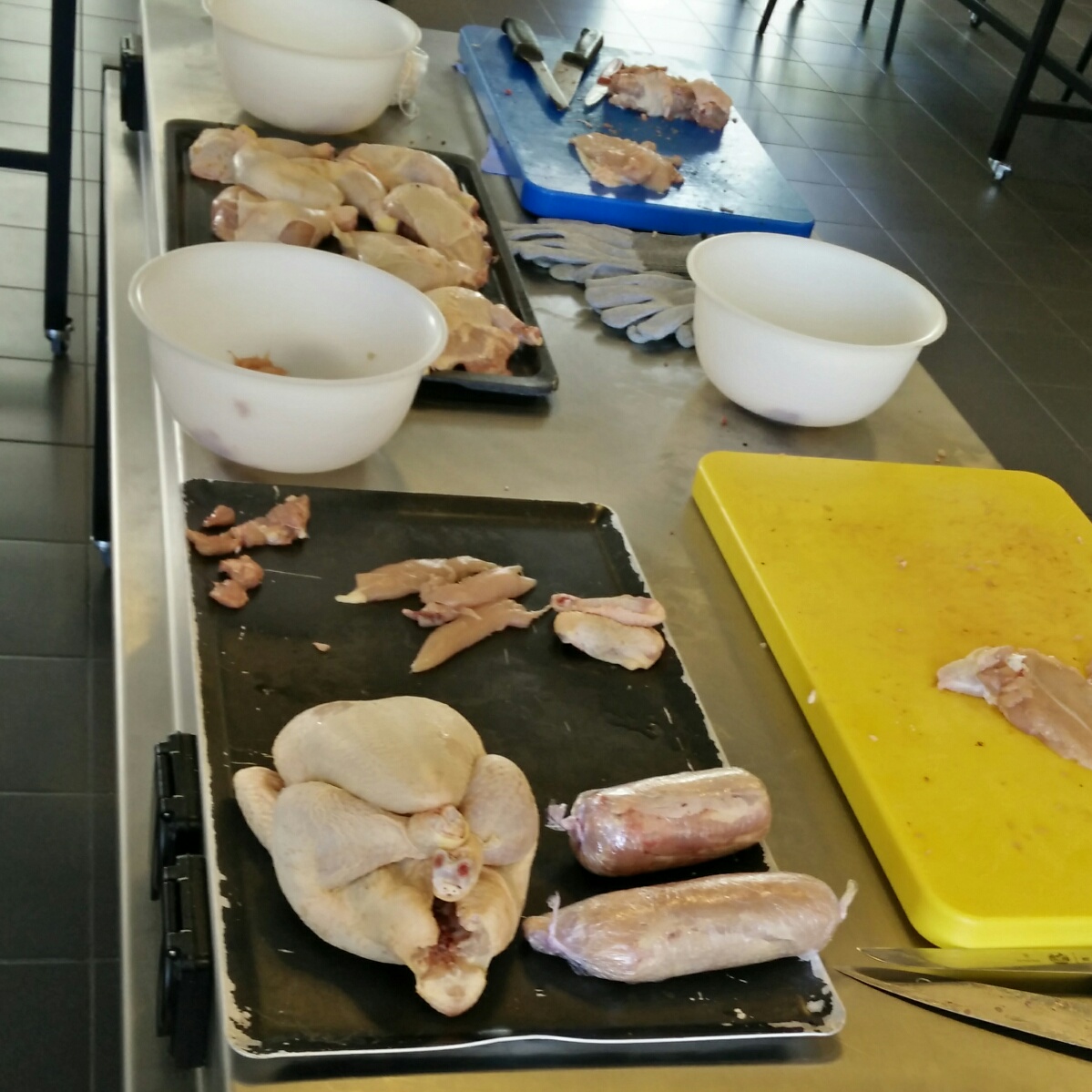
​A unique workshop where you will learn all about meat, the issues it raises and the latest technology. Watch as our activity leader joints a piece of meat, explaining each stage of the process. You then use some of the cuts to create a dish to sample together at the end of the workshop.

Katy bought me a place in an Alimentarium workshop. It turned into a 3h private chef lesson, seeing as I was the only person registered. We made chicken appetisers, ballotines, two different types of sausage, and generally had a really good chat about food in general. We ate what we cooked, but there was so much of it that the family enjoyed the leftovers.

uncategorized

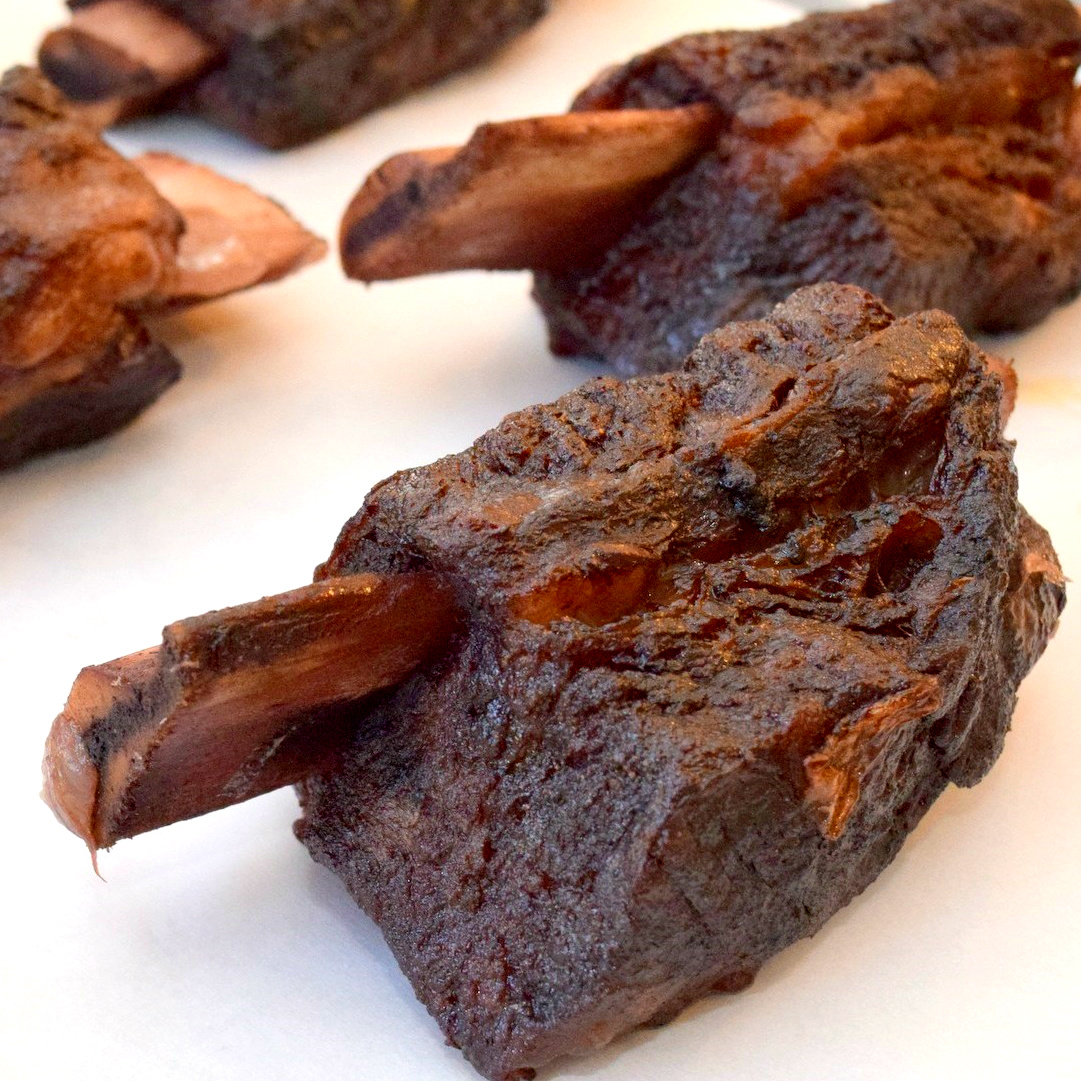
[recipe] Oven-braised beef short ribs

Posted on June 16, 2017 By admin


6 10” English-style bone-in beef short ribs (about 4.5 kg). English short ribs are cut lengthwise along the bone, so the meat sits on top. With a day or two of notice, any butcher should be able to cut them to order.
Kosher salt and freshly ground black pepper
BBQ sauce

Season short ribs generously with salt and pepper; place in a large roasting pan and chill, uncovered, 12 hours.

Preheat oven to 325F/160C. Add 1 cup water to roasting pan. Cover pan with foil and cook until meat is tender, 2.5–3 hours. Uncover pan, baste generously with BBQ sauce and increase oven temperature to 400F/200C. Roast until ribs are browned on top, 25–30 minutes longer.

uncategorized

The illlusion of competence

Posted on June 16, 2017June 16, 2017 By admin

One day in 1995, a large, heavy middle-aged man robbed two Pittsburgh banks in broad daylight. He didn’t wear a mask or any sort of disguise. And he smiled at surveillance cameras before walking out of each bank. Later that night, police arrested a surprised McArthur Wheeler. When they showed him the surveillance tapes, Wheeler stared in disbelief. ‘But I wore the juice,’ he mumbled. Apparently, Wheeler thought that rubbing lemon juice on his skin would render him invisible to videotape cameras. After all, lemon juice is used as invisible ink so, as long as he didn’t come near a heat source, he should have been completely invisible.

Police concluded that Wheeler was not crazy or on drugs – just incredibly mistaken.

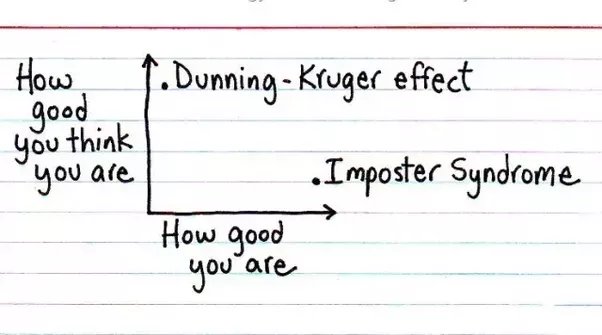
The saga caught the eye of the psychologist David Dunning at Cornell University, who enlisted his graduate student, Justin Kruger, to see what was going on. They reasoned that, while almost everyone holds favourable views of their abilities in various social and intellectual domains, some people mistakenly assess their abilities as being much higher than they actually are. This ‘illusion of confidence’ is now called the ‘Dunning-Kruger effect’, and describes the cognitive bias to inflate self-assessment.

To investigate this phenomenon in the lab, Dunning and Kruger designed some clever experiments. In one study, they asked undergraduate students a series of questions about grammar, logic and jokes, and then asked each student to estimate his or her score overall, as well as their relative rank compared to the other students. Interestingly, students who scored the lowest in these cognitive tasks always overestimated how well they did – by a lot. Students who scored in the bottom quartile estimated that they had performed better than two-thirds of the other students!

This ‘illusion of confidence’ extends beyond the classroom and permeates everyday life. In a follow-up study, Dunning and Kruger left the lab and went to a gun range, where they quizzed gun hobbyists about gun safety. Similar to their previous findings, those who answered the fewest questions correctly wildly overestimated their knowledge about firearms. Outside of factual knowledge, though, the Dunning-Kruger effect can also be observed in people’s self-assessment of a myriad of other personal abilities. If you watch any talent show on television today, you will see the shock on the faces of contestants who don’t make it past auditions and are rejected by the judges. While it is almost comical to us, these people are genuinely unaware of how much they have been misled by their illusory superiority.

Sure, it’s typical for people to overestimate their abilities. One study found that 80 per cent of drivers rate themselves as above average – a statistical impossibility. And similar trends have been found when people rate their relative popularity and cognitive abilities. The problem is that when people are incompetent, not only do they reach wrong conclusions and make unfortunate choices but, also, they are robbed of the ability to realise their mistakes. In a semester-long study of college students, good students could better predict their performance on future exams given feedback about their scores and relative percentile. However, the poorest performers showed no recognition, despite clear and repeated feedback that they were doing badly. Instead of being confused, perplexed or thoughtful about their erroneous ways, incompetent people insist that their ways are correct. As Charles Darwin wrote in The Descent of Man (1871): ‘Ignorance more frequently begets confidence than does knowledge.’

Interestingly, really smart people also fail to accurately self-assess their abilities. As much as D- and F-grade students overestimate their abilities, A-grade students underestimate theirs. In their classic study, Dunning and Kruger found that high-performing students, whose cognitive scores were in the top quartile, underestimated their relative competence. These students presumed that if these cognitive tasks were easy for them, then they must be just as easy or even easier for everyone else. This so-called ‘imposter syndrome’ can be likened to the inverse of the Dunning-Kruger effect, whereby high achievers fail to recognise their talents and think that others are equally competent. The difference is that competent people can and do adjust their self-assessment given appropriate feedback, while incompetent individuals cannot.

And therein lies the key to not ending up like the witless bank robber. Sometimes we try things that lead to favourable outcomes, but other times – like the lemon juice idea – our approaches are imperfect, irrational, inept or just plain stupid. The trick is to not be fooled by illusions of superiority and to learn to accurately reevaluate our competence. After all, as Confucius reportedly said, real knowledge is knowing the extent of one’s ignorance.

Aeon counter – do not remove

Kate Fehlhaber

This article was originally published at Aeon and has been republished under Creative Commons.

uncategorized

Imposter syndrome, or when programming was no longer fun

Posted on June 16, 2017 By admin

I loved programming. I loved being able to create something out of nothing. Solving the puzzle of the program and seeing it come to life. Constantly learning new things while hours flew by, and better yet I was paid for it.

I went to one of the best universities in the country for computer science. I cruised into my first job after a successful summer placement. I loved my work and I did well. I moved from a junior position to senior position and was recognized for my hard work and contributions.

Somewhere along the line it stopped being fun. Suddenly I hated going to work. Every day I battled with a growing anxiety that would not go away.

What happened?

– I started comparing myself to other people that were better than me.
– I started to fear doing things wrong and being a failure.
– I started to fear not knowing enough and constantly tried to learn everything.
– I started to feel a crushing weight of responsibility for my job, partner, children, mortgage, and bills
– I started to fear that I would be exposed as a fake.

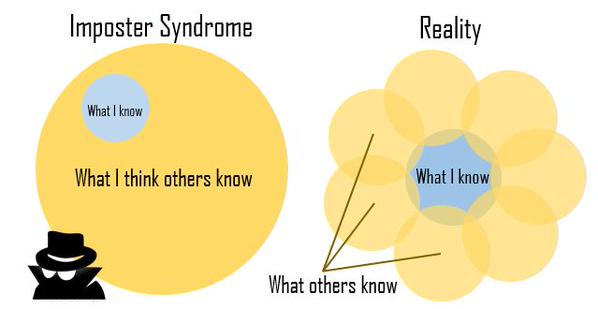
What I did not realize then is that I was facing a severe case of impostor syndrome.

Instead of enjoying my work I would constantly be worried that I did not know enough, and that I was not doing enough. That I was not providing enough value. I forgot about my accomplishments and emphasized any mistake I made as a complete failure. I started to seek perfection in a world where it’s impossible. Not only did I seek perfection but I expected it of everyone else. It was a recipe for stress and unhappiness.

I remember doing demos of my work in the past. I was confident and happy to do them in front of a number of people. Suddenly I dreaded them. I would become so nervous my voice would tremble as I tried to talk. My thinking was clouded by the dread of saying something stupid, and what others would think of me.

The crushing anxiety was preventing me from enjoying my work and doing well. It was taking its toll on my health. I would feel drained of energy and not sleep well. It was putting strain on my family and relationships. It felt like a ticking time bomb.

It has been stated that up to 70% of people experience impostor syndrome. The trouble is you feel like you’re the only one, as you’re not aware of anyone else going through it. There is a good chance that one of your co-workers is experiencing it right now, but it may not be obvious that something is wrong. It can manifest itself in different ways, and people are good at covering things up especially in a professional environment.

Some points for anyone experiencing it

– Recognize what you do know. It’s more than you think.
– Recognize what you have accomplished. You earned it.
– Take a compliment when you get one. You deserve it.
– Compare yourself only to yourself.
– Realize that nobody really knows what they are doing. Everyone is on a learning journey.
– It’s OK to not know everything. Software development is too vast and moves too quickly to know everything. Usually you know just as much as others but in different areas.
– Teach others, it will help you realise how much you do know.
– It’s OK to fail. In fact it’s a necessary and important part of life. Learn from it.
– It’s OK to be wrong. Be open to feedback.
– You will forget things over time. Go back over things you have not used recently.
– There will be egos in the workplace that talk down others. Ignore them.
– Not everything you produce needs to be perfect. Software development is (as is life) about incremental improvements. You are not that piece of code that you put together in a few hours and needs improving.
– Assume that everyone else has impostor syndrome. Tell someone when they have done something good. Tell them what they are good at. Tell them it’s OK if something goes wrong they did a great job. A small comment can go a long way. Having a team of people doing this for each other will foster a healthy environment. We are all human beings and everyone has fears and doubts. Everyone has problems and hardships they are facing outside of work. This idea often gets lost in the veil of professionalism, and we become ever more disconnected. Once we realize and appreciate this we can move towards a more personal and connected workplace.

I am not sure that the feeling of impostor syndrome will ever completely go away. Though it has faded since understanding and recognizing it. Knowing that many others experience it, and that it’s quite normal also helps. I am happy to say that I am getting back to a place where programming is fun.

Understand that it can hit you at any time. It may be when you’re just getting started in programming, or it may be when you have been doing it for 10 years. It may be when you have a newborn baby at home. It may be when you get made redundant and flunk an interview.

What is most important is an awareness of it. Take it seriously. When it does come knocking you can recognize it and work on it instead of letting it consume you. Connect with people and help them to prevent feeling like an impostor. Hopefully you will get the same in return. Lets work to ensure that programming is always enjoyable.

Original link: dev.to()

uncategorized

Just 10 more minutes…

Posted on June 15, 2017 By admin

uncategorized

Leave a message at the tone

Posted on June 15, 2017 By admin

uncategorized

Cause maybe the compiler is wrong

Posted on June 14, 2017 By admin

It’s been known to happen – but generally this is the definition of insanity.

uncategorized

Straight out of a nouveau-vintage catalog

Posted on June 14, 2017June 14, 2017 By admin

The child is wearing my socks this morning. I think he looks retro-cool, he says it keeps his legs warm.

uncategorized

No idea what’s happening here

Posted on June 12, 2017January 6, 2020 By admin
https://www.flubu.com/blog/wp-content/uploads/2017/06/flamingo-kick.webm

but it looks really, really fun!

uncategorized

Posts pagination

Previous 1 … 153 154 155 … 703 Next

Power to the beaver!

Show me the beaver!
September 2026
M T W T F S S
 123456
78910111213
14151617181920
21222324252627
282930  
« Aug    

Quote of the day

Everything starts somewhere, though many physicists disagree. But people have always been dimly aware of the problem with the start of things. They wonder how the snowplough driver gets to work, or how the makers of dictionaries look up the spelling of words.
--(Terry Pratchett, Hogfather)

Random Posts

  • Preferably with someone else
  • That boy will break hearts one day
  • Pavel the cat nurse
  • blergh
  • In no way can this end well
reading leopard

Tags

bobble the little blue owl boobies brought to you by the fda cats chonk christmas comics computers are evil covid-19 dealing with idiots dilbert dog ducks galleries geek god bless the land of the free holidays house I am Canadian land of cheese and chocolate linked news lolcat london news from the stupid not my dog nsfw pets pictures potd2014 qotd random shit re-member recipes relationship shrill slice of life stress Tao the british way The Peanut things i miss travel video wine work

Archives

Meta

  • Log in
  • Entries feed
  • Comments feed
  • WordPress.org

Copyright © 2026 The beaver is a proud and noble animal.

Powered by PressBook Premium theme

Loading Comments...