Skip to content
The beaver is a proud and noble animal

The beaver is a proud and noble animal

Notes from a bemused canuck

  • Home
  • About
  • Bookmarks
  • Pictures
  • Resume
  • Wine
  • Random Recipe
  • Toggle search form

Tag: news from the stupid

The world is gonig nuts

Posted on December 10, 2007 By admin

The more I see news like this, the more I dispair. The world will soon be a place where murder will be swept aside for a much more serious problem. By this, I mean of course the scourge of intellectual property theft.

Drive-by shootings in the inner city? Not a priority. After all, they're all animals and it's just natural selection. But a teenager downloading a non-DRM MP3? We can't have that!!! Throw the book at him! How dare he deprive the RIAA from its hard-earned price gouging?

Bitter much? Oh, yes.


Christmas is known world-wide as a time for sharing, a time for giving. But for one charity, instead of Santa arriving with gifts, the copyright police turned up demanding money. Why? Because the charity allows children to sing carols on the premises and their kitchen radio is a little loud. You couldnt make it up.

Be under no illusion, being unlicensed to play music to the public is a very serious situation in the UK. The Copyright, Designs and Patents Act 1988 states that if you use copyright music in public, you have to get permission from every single copyright holder to play their music. Or pay a fee to the right outfit.

Car maintenance chain Kwik Fit is currently tied up in a bitter legal battle with the UK Performing Rights Society (PRS). Its alleged that Kwik Fits mechanics allowed their radios to be played within earshot of the public – a truly heinous crime for which the PRS are demanding in damages.

According to a report, the PRS are at it again. The staff at a charity also received a visit from a PRS officer who declared that because a staff radio in the kitchen could be overheard by the public in their tea-room, they would need a license. The charity, Dam House, which was originally set up to save a historic building and offer community and health facilities, had to have a fund-raising event to raise the money for the license.

However, having purchased a license, this wasnt the end of the matter. The PRS then started asking more questions, and when they discovered that kids sing in a carol concert there at Christmas, they declared that the premises were under licensed. Yes, of course – the PRS wanted yet more money.

We got really worked up when they told us how much we would have to pay this year said charity trustee, Margaret Hatton. They asked us what facilities we had and we think they are charging more because they found out weve got a function room.

The next quote from Margaret really speaks for itself – has the world gone mad?

They told us the only way to avoid paying to sing the carols is if the kids are told to stick to old songs which are out of copyright.

Next thing you know someone will be saying Happy Birthday is copyrighted and you cant sing that to the public in the tea-rooms. Well, unfortunately it is, and legally you cant.

Elaine Hurst, another Dam House trustee explained: We know the recording artists need to be paid for their work but this is ridiculous.

Every TV owning family in the UK has to have a UK TV License by law, the proceeds of which go to fund BBC TV and BBC radio stations nationwide. To charge a charity money because the public can overhear a radio is crazy, especially when you consider the public already paid another license to be allowed to listen to the content coming out of its speakers.
uncategorized

Elementary, my dear Watson. You're full of shit :)

Posted on December 10, 2007 By admin

James Watson, the DNA pioneer who claimed Africans were less intelligent than whites, has been found to have more genes of black origin than most Europeans.

An analysis of Dr Watson's genome shows 16 of his genes are likely to have come from a black ancestor of African descent. By contrast, most people of European descent would have no more than one such gene.

The study was made possible when Dr Watson allowed his genome – the map of all his genes – to be published on the internet in the interests of science and research.

“This level is what you would expect in someone who had a great-grandparent who was African,” said Kari Stefansson of deCODE Genetics, whose company carried out the analysis.

“It was very surprising to get this result for Jim.”

Dr Watson won the Nobel Prize, with Francis Crick and Maurice Wilkins, after working out the structure of DNA in 1953. However, he provoked an outcry earlier this year when he suggested black people were genetically less intelligent than whites.

His critics savoured the latest wry twist of fate at the weekend. John Sulston, the Nobel laureate who helped lead the consortium that decoded the human genome, said the discovery was ironic in view of Dr Watson's opinions on race.

“I never did agree with Watson's remarks,” he said. “We don't understand enough about intelligence to generalise about race.”

The backlash against Dr Watson forced him to step down as chancellor of Cold Spring Harbor Laboratory in New York state, after 39 years at the helm.

He said he was “inherently gloomy about the prospects for Africa” because “all our social policies are based on the fact that their intelligence is the same as ours – whereas all the testing says not really”.

The analysis of his genome by deCODE Genetics, an Icelandic company, shows a further nine of Dr Watson's genes are likely to have come from an ancestor of Asian descent. Dr Watson was not available for comment.

uncategorized

Happy birthday Fortnum & Mason

Posted on December 6, 2007January 29, 2020 By admin 2 Comments on Happy birthday Fortnum & Mason

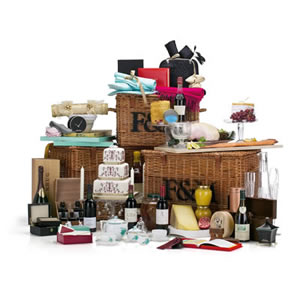
This year marks Fortnum & Mason's 300th anniversary.

From their FAQ:

In 1707 Hugh Mason had a small shop in St Jamess Market and a spare room in his house. The Fortnum family had come to London from Oxford as high-class builders in the wake of the Great Fire, helping to establish the St Jamess and Mayfair areas as the most fashionable in London. William climbed another rung by taking a post as footman in Queen Annes household – and the room at Mr Masons. The Royal Familys insistence on having new candles every night meant a lot of half-used wax for an enterprising footman to sell on at a profit so while the Queens wages paid the rent, Williams enlightened sideline melted down into enough to start a respectable business. The rest, as they say, is grocery.

To commemorate the event, they are selling, for this year only, The Tercenturian Hamper. It needs The Capitalization. You see, it's £20,000.

It contains:

* Cup of Excellence Coffee Gift
* 3x 250g caddies; Ladies’ Travel Set includes Jewellery Roll, Slippers, Mask and Cushion
* 25 Person Foie Gras en Croûte, 1.09kg
* Balsamic Treasure Trove, 2x 250ml bottle, 3x 50ml bottles
* Two pairs of Cashmere Socks in pink and grey
* Side of Smoked Scottish Wild Salmon, min. wt. 1.6kg
* Beluga Caviar, 200g tin
* William Yeoward Caviar Glass Dish
* Château d’Yquem, 1er Grand Cru Sauternes 1996 5 ltr Jeroboam
* Le Montrachet Grand Cru, J Prieur 1995
* Leather Cigar Holder
* Two William Yeoward Champagne Flutes
* William Yeoward Champagne Jug
* Three-tier Rich Celebration Fruitcake, min. wt. 8kg
* Château Latour, 1er Grand Cru Classe Pauillac 1970
* Gentleman’s Leather Jewellery Box
* Silver-plated Elephant Place Settings
* Two Cashmere Scarves in pink and brown
* Silk Box filled with a Selection of Chocolates, 2kg box
* Beaufort Cheese, min. wt. 2kg
* Cropwell Bishop Whole Baby Stilton, min. wt. 2.2kg
* Highgrove Ham, min. wt. 5.7kg
* Krug Champagne, Vintage Collection 1981, Magnum
* Tercentenary Champagne Truffles, 250g drum
* Vintage Port, Fonseca 1955
* Herend Tea Set for Two
* Tercentenary Ceramic Tea Caddy containing White Tea, 40g
* Château Margaux, 1er Grand Cru Classe Margaux 1983
* St James Christmas Pudding, 1.81kg ceramic basin
* Griottes, 227g wooden box
* Fortnum’s Favourites, 2.8kg box
* Wood and Steel Cigar Cutter
* Baron de Lustrac, Armagnac 1900
* Hand-engraved Stationery
* Wine Notes Book in Leather
* Entertaining Book
* “The First Three Hundred Years”, Fortnum & Mason Book
* Chunk Comb Honey, 14lb jar
* The Paragon Crackers, box of six
* William Yeoward Glass Honey Pot
* Lime Curd, 908g jar
* Lemon Curd, 908g jar
* Fortnum & Mason Apron, Oven Glove, Tea Cosie and Tea Towel
* Two leather Luggage Tags in red and black

Presented in a three-tiered English willow hamper set.

TWENTY THOUSAND POUNDS OMGWTFBBQ!!!11!11!11oneone!!1!

uncategorized

Reason # 2347890123 to avoid going to the US

Posted on December 3, 2007 By admin

U.S. Plans to Screen All Who Enter, Leave Country
Personal Data Will Be Cross-Checked With Terrorism Watch Lists; Risk Profiles to Be Stored for Years

The federal government disclosed details yesterday of a border-security program to screen all people who enter and leave the United States, create a terrorism risk profile of each individual and retain that information for up to 40 years.

While long known to scrutinize air travelers, the Department of Homeland Security is seeking to apply new technology to perform similar checks on people who enter or leave the country “by automobile or on foot,” the notice said. The department intends to use a program called the Automated Targeting System, originally designed to screen shipping cargo, to store and analyze the data.

“We have been doing risk assessments of cargo and passengers coming into and out of the U.S.,” DHS spokesman Jarrod Agen said. “We have the authority and the ability to do it for passengers coming by land and sea.”

In practice, he said, the government has not conducted risk assessments on travelers at land crossings for logistical reasons.

“We gather, collect information that is needed to protect the borders,” Agen said. “We store the information we see as pertinent to keeping Americans safe.”

Civil libertarians expressed concern that risk profiling on such a scale would be intrusive and would not adequately protect citizens' privacy rights, issues similar to those that have surrounded systems profiling air passengers.

“They are assigning a suspicion level to millions of law-abiding citizens,” said David Sobel, senior counsel of the Electronic Frontier Foundation. “This is about as Kafkaesque as you can get.”

The notice comes as the department is tightening its ability to identify people at the borders. At the end of the year, for example, Homeland Security is expanding its Visitor and Immigrant Status Indicator Technology program, under which 32 million noncitizens entering the country annually are fingerprinted and photographed at 115 airports, 15 seaports and 154 land ports.

The risk assessment is created by analysts at the National Targeting Center, a high-tech facility opened in November 2001 and now run by Customs and Border Protection. In a round-the-clock operation, targeters match names against terrorist watch lists and a host of other data to determine whether a person's background or behavior indicates a terrorist threat, a risk to border security or the potential for illegal activity. They also assess cargo. Each traveler assessed by the center is assigned a numeric score: The higher the score, the higher the risk. A certain number of points send the traveler back for a full interview.

The Automated Targeting System relies on government databases that include law enforcement data, shipping manifests, travel itineraries and airline passenger data, such as names, addresses, credit card details and phone numbers.

In yesterday's Federal Register notice, Homeland Security said it will keep people's risk profiles for up to 40 years “to cover the potentially active lifespan of individuals associated with terrorism or other criminal activities,” and because “the risk assessment for individuals who are deemed low risk will be relevant if their risk profile changes in the future, for example, if terrorist associations are identified.”

According to yesterday's notice, the program is exempt from certain requirements of the Privacy Act of 1974 that allow, for instance, people to access records to determine “if the system contains a record pertaining to a particular individual” and “for the purpose of contesting the content of the record.”

Source: Washington Post


Ahhh, America. The land of the free. For a certain value of Free, of course.

uncategorized

From the desk of Phineas Taylor Barnum…

Posted on November 30, 2007 By admin

Lindsay, 22, has a certain confidence in her step now — compliments of what's in her shirt. “I've just always wanted them. I think breast implants are super sexy.” How much did her new breasts cost her? Not a single dime. Total strangers footed the bill for her new breasts. She explains, “Currently on our web site there is 20,297 guys willing to donate to boob jobs. I think that's incredible. I love the Internet.”

Benefactors donate at least $1.20 each time they email any of the 3,000 women waiting for implants. Lindsay said, “Probably about 10 guys really paid for my boob job.”

There have been 41 “boob jobs” paid for and completed since My Free Implants took off two years ago. In fact, 11 of those 41 surgeries happened this month. Lindsay said, “I went from an A-cup to a double-D.” As women's cup sizes grow, so does the business. Co-founders Jason Grunstra and Jay Moore expect to raise a million dollars before the year is out.

What possesses a total stranger to pay for this?

The founders explain, “For some of them, they have a lot of money… a charity type thing. For others, it's like science fiction…creating the perfect woman in their eyes.” They continued, “Guys spend hundreds of dollars on drinks at a bar on women they don't know. This might be a better investment for some guys.”

The most amount of money donated by one benefactor is $30,000 in one month by a man from the UK. The founders said they paid for just over three breast surgeries. Ninety percent of the money that benefactors donate goes directly to the woman's doctor of choice. With advertising that consists of doctor listings on the site and ten percent of the net proceeds, these entrepreneurs are in for a huge payoff, and they're not even 30-years-old.

In the meantime… women who have received the implants are thrilled. One said she thinks the two founders are brilliant. Another says, “A big thank you to Jason and Jay. You guys are a God send.”

God sends that encourage benefactors to “help improve the women's self esteem and confidence.” Lindsay agrees, “I got something I wanted for free and had fun while doing it.” She says her clothes fit better now, and everyone smiles at her more. Lindsay's benefactors didn't come away completely empty handed. For as little as $1.20 per e-mail, they got to see photos of her new figure.

uncategorized

Old School Sesame Street not for the little kiddies anymore

Posted on November 19, 2007 By admin

Sweeping the Clouds Away
By VIRGINIA HEFFERNAN

Sunny days! The earliest episodes of Sesame Street are available on digital video! Break out some Keebler products, fire up the DVD player and prepare for the exquisite pleasure-pain of top-shelf nostalgia.

Just dont bring the children. According to an earnest warning on Volumes 1 and 2, Sesame Street: Old School is adults-only: These early Sesame Street episodes are intended for grown-ups, and may not suit the needs of todays preschool child.

Say what? At a recent all-ages home screening, a hush fell over the room. What did they do to us? asked one Gen-X mother of two, finally. The show rolled, and the sweet trauma came flooding back. What they did to us was hard-core. Man, was that scene rough. The masonry on the dingy brownstone at 123 Sesame Street, where the closeted Ernie and Bert shared a dismal basement apartment, was deteriorating. Cookie Monster was on a fast track to diabetes. Oscars depression was untreated. Prozacky Elmo didnt exist.

Nothing in the childrens entertainment of today, candy-colored animation hopped up on computer tricks, can prepare young or old for this frightening glimpse of simpler times. Back then as on the very first episode, which aired on PBS Nov. 10, 1969 a pretty, lonely girl like Sally might find herself befriended by an older male stranger who held her hand and took her home. Granted, Gordon just wanted Sally to meet his wife and have some milk and cookies, but . . . well, he could have wanted anything. As it was, he fed her milk and cookies. The milk looks dangerously whole.

Live-action cows also charge the 1969 screen cows eating common grass, not grain improved with hormones. Cows are milked by plain old farmers, who use their unsanitary hands and fill one bucket at a time. Elsewhere, two brothers risk concussion while whaling on each other with allergenic feather pillows. Overweight layabouts, lacking touch-screen iPods and headphones, jockey for airtime with their deafening transistor radios. And one of those radios plays a late-60s news report something about a senior American official and two billion in credit over the next five years that conjures a bleak economic climate, with war debt and stagflation in the offing.

The old Sesame Street is not for the faint of heart, and certainly not for softies born since 1998, when the chipper Elmos World started. Anyone who considers bull markets normal, extracurricular activities sacrosanct and New York a tidy, governable place well, the original Sesame Street might hurt your feelings.

I asked Carol-Lynn Parente, the executive producer of Sesame Street, how exactly the first episodes were unsuitable for toddlers in 2007. She told me about Alistair Cookie and the parody Monsterpiece Theater. Alistair Cookie, played by Cookie Monster, used to appear with a pipe, which he later gobbled. According to Parente, That modeled the wrong behavior smoking, eating pipes so we reshot those scenes without the pipe, and then we dropped the parody altogether.

Which brought Parente to a feature of Sesame Street that had not been reconstructed: the chronically mood-disordered Oscar the Grouch. On the first episode, Oscar seems irredeemably miserable hypersensitive, sarcastic, misanthropic. (Bert, too, is described as grouchy; none of the characters, in fact, is especially sunshiney except maybe Ernie, who also seems slow.) We might not be able to create a character like Oscar now, she said.

Snuffleupagus is visible only to Big Bird; since 1985, all the characters can see him, as Big Birds old protestations that he was not hallucinating came to seem a little creepy, not to mention somewhat strained. As for Cookie Monster, he can be seen in the old-school episodes in his former inglorious incarnation: a blue, googly-eyed cookievore with a signature gobble (om nom nom nom). Originally designed by Jim Henson for use in commercials for General Foods International and Frito-Lay, Cookie Monster was never a righteous figure. His controversial conversion to a more diverse diet wouldnt come until 2005, and in the early seasons he comes across a Childs First Addict.

The biggest surprise of the early episodes is the rural agrarian, even sequences. Episode 1 spends a stoned time warp in the company of backlighted cows, while they mill around and chew cud. This pastoral scene rolls to an industrial voiceover explaining dairy farms, and the sleepy chords of Joe Raposos aimless masterpiece, Hey Cow, I See You Now. Chewing the grass so green/Making the milk/Waiting for milking time/Waiting for giving time/Mmmmm.

Oh, whats that? Right, the trance of early Sesame Street and its country-time sequences. In spite of the shows devotion to its target child, the 4-year-old inner-city black youngster (as The New York Times explained in 1979), the first episodes join kids cavorting in amber waves of grain black children, mostly, who must be pressed into service as the face of Americas farms uniquely on Sesame Street.

In East Harlem and Bedford-Stuyvesant in 1978, 95 percent of households with kids ages 2 to 5 watched Sesame Street. The figure was even higher in Washington. Nationwide, though, the number wasnt much lower, and was largely determined by the whims of the PBS affiliates: 80 percent in houses with young children. The so-called inner city became anywhere that Sesame Street played, because the Childrens Television Workshop declared the inner city not a grim sociological reality but a full-color fantasy an eccentric scene, framed by a box and far removed from real farmland and city streets alike.

The concept of the inner city or slums, as The Times bluntly put it in its first review of Sesame Street was therefore transformed into a kind of Xanadu on the show: a bright, no-clouds, clear-air place where people bopped around with monsters and didnt worry too much about money, cleanliness or projecting false cheer. The Upper West Side, hardly a burned-out ghetto, was said to be the model.

People on Sesame Street had limited possibilities and fixed identities, and (the best part) you werent expected to change much. The harshness of existence was a given, and no one was proposing that numbers and letters would lead you out of your inner city to Elysian suburbs. Instead, Sesame Street suggested that learning might merely make our days more bearable, more interesting, funnier. It encouraged us, above all, to be nice to our neighbors and to cultivate the safer pleasures that take the edge off taking baths, eating cookies, reading. Dont tell the kids.

uncategorized

Hooker! Hooker! Hooker!

Posted on November 15, 2007 By admin 2 Comments on Hooker! Hooker! Hooker!

He is an unlikely revolutionary but this Christmas, Santa is a rebel with a claus. He is having the last laugh on political correctness – and it's a great big fat belly laugh. Santas across Sydney are rebelling against attempts to ban their traditional greeting of “ho, ho, ho” in favour of “ha, ha, ha”.

Recruitment firm Westaff – which supplies hundreds of Santas across the country – has told its trainees that the “ho ho ho” phrase could frighten children and could even be derogatory to women.

One would-be Santa has told The Daily Telegraph he was taught not to use “ho, ho, ho” because it was too close to the American slang for prostitute. He quit.

Source: Daily Telegraph

uncategorized

The poutine turns 50 – give it some love!

Posted on November 13, 2007 By admin 8 Comments on The poutine turns 50 – give it some love!

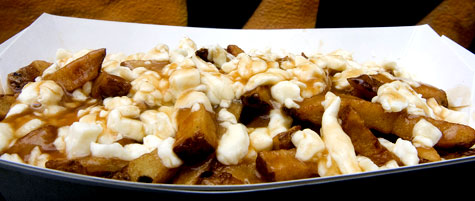
It is described as a cholesterol highball, a fatty delight and a fast food icon. And at 50, the concoction of french fries topped with gravy and salty cheese curds is gaining newfound respect.

It hasn't always been that way, though. Charles-Alexandre Théorêt, author of Maudite Poutine!, describes the dish to Montreal's The Gazette as being more psychological in nature:

A generous portion of shame fried gently in an inferiority complex and topped with a hint of denigration from the ROC (Rest of Canada) – and a touch of guilty pleasure. “Love it or hate it, poutine has become a strong symbol of Quebec,” says Théorêt.

The exact origin of poutine is unclear, but most stories place the date at 1957. Fernand Lachance, a restauranteur who referred to himself as the father of poutine, was asked by a customer to mix french fries and cheese curds together in the same bag.

Warwick, then replied: “Ça va te faire une maudite poutine” (“It's gonna make a hell of a mess”). The sauce was added later to keep the fries warm.

Mess or no, the “lumberjack fat food” remains popular, and being elevated to an haute-cuisine dish while showing up on menus across the U.S.

Source: National Post

uncategorized

Search for British motto turns cynical

Posted on November 13, 2007 By admin 1 Comment on Search for British motto turns cynical

It must have seemed such a simple wheeze to Gordon Brown: a motto to capture what makes Britain great. The idea ticks so many boxes on the Prime Ministers to-do list that it proved irresistible to him.

A motto would be new, but could convey tradition. Choosing it means consulting people, the kind of participatory democracy that rebuilds trust in politics. And then there is the unstated post-devolution awkwardness of having a Scot as Prime Minister. The motto can highlight Britishness, what unites rather than what divides us. How clever! How British!

However, before the wording of Mr Browns motto has even been agreed, let alone embossed on letterheads and passports, the public seems to have rumbled him.

Hundreds of suggestions have been submitted by Times Online readers, in response to an invitation by Comment Central blog. There can, surely, be few citizens juries more representative of Middle Britain. And yet they make grim reading for the Prime Minister.

A few make game efforts to enter the spirit of Mr Browns earnest endeavour to capture the spirit of Britishness in a few short words. Some are predictable, others a little lame; they wouldnt really do the trick for Mr Brown. Many more home straight in on the very question of Scotlands place in the United Kingdom that Mr Brown would rather we all skated over. Others capture a sense of decline, with a sizeable number of contributors linking this with Labours decade in power.

Other undercurrents are a fixation with alcohol, nascent hostility to the French and the Americans, and a stubborn refusal to treat the quest for a motto with the seriousness that our Prime Minister clearly thinks it deserves. Several refer to cups of tea; a couple are even devoted to dentistry.

One contributor describes modern Britain thus: Dipso, Fatso, Bingo, Asbo, Tesco.

Some attempt to capture the combination of diffidence and stoicism of the British: Britain, a terribly nice place, Less stuffy than we sound, Stubborn to the point of greatness and Turned out nice again.

Some readers, a minority admittedly, take the idea seriously. Britain: my country, my home, might fit the bill for Mr Brown, at a stretch. I respect who you are could appeal to the man who, on becoming Prime Minister, quoted the motto of his old school, Kirkcaldy High: I will try my utmost.

There are the worthy, if cheesy: Great people, great country, Great Britain, Hail Great Britain! Live, develop and flower, A country so brave and true, Fairness for all and For honour and for freedom.

A touch of Victorian triumphalism is evident in some: Pride, passion, history, monarchy, exploration or Courage, reason, humanity, democracy, monarchy.

Then come the less comfortable, captured thus: Promoting ahistorical unity myths since 1066. Others are more pointed: West Lothian was my undoing, Britain will always be England or Britain is dead. Long live England.

Just as unwelcome to the Prime Minister are mottos with a broader political flavour: Once Great: Britain, Once mighty empire, slightly used, Your nation, ruined by Labour, and Going down with Brown.

Americans who missed the boat, another contribution hinting at a lack of national pride, is offset by At least were not France.

There were signs in Whitehall yesterday that Mr Brown may be going cool on the idea. Last month Michael Wills, a Constitutional Affairs Minister, told MPs that he welcomed suggestions for a national motto. But his department said yesterday: The Ministry of Justice is working on a statement of values. If proposals for a motto come from that, obviously we would look at them.

Returning to the drawing board would chime with several ideas from Times Online readers. One proposes: Britain is great without a motto.

Original Times Entry:
http://timesonline.typepad.com/comment/2007/11/i-want-comment-.html

Some of my favourites:

  • At Least We're Not American
  • Dead Heroes And Live Morons
  • Dipso, Fatso, Bingo, Asbo, Tesco
  • Drinking Continues Till Morale Improves
  • I'll Put The Kettle On.
  • Land Of 'Health and Safety'
  • Once 'Great', Now Not So
  • Sex, Drink, Death and Taxes.
  • Someday This Too Shall Pass
  • Til Death Doth Us Tax…
  • We Apologise For The Inconvenience
  • We Strive For Valliant Defeat
  • Yeah, But No, But, Yeah.
  • Impossible To Not Be Cynical
  • Sorry, Is This The Queue?
  • The Government Should Do Something
uncategorized

The Economic Consequences of Mr. Bush

Posted on November 12, 2007 By admin 2 Comments on The Economic Consequences of Mr. Bush

[Note: Emphasis mine]

The next president will have to deal with yet another crippling legacy of George W. Bush: the economy. A Nobel laureate, Joseph E. Stiglitz, sees a generation-long struggle to recoup.

When we look back someday at the catastrophe that was the Bush administration, we will think of many things: the tragedy of the Iraq war, the shame of Guantand Abu Ghraib, the erosion of civil liberties. The damage done to the American economy does not make front-page headlines every day, but the repercussions will be felt beyond the lifetime of anyone reading this page.

I can hear an irritated counterthrust already. The president has not driven the United States into a recession during his almost seven years in office. Unemployment stands at a respectable 4.6 percent. Well, fine. But the other side of the ledger groans with distress: a tax code that has become hideously biased in favor of the rich; a national debt that will probably have grown 70 percent by the time this president leaves Washington; a swelling cascade of mortgage defaults; a record near-$850 billion trade deficit; oil prices that are higher than they have ever been; and a dollar so weak that for an American to buy a cup of coffee in London or Paris – or even the Yukon – becomes a venture in high finance.

And it gets worse. After almost seven years of this president, the United States is less prepared than ever to face the future. We have not been educating enough engineers and scientists, people with the skills we will need to compete with China and India. We have not been investing in the kinds of basic research that made us the technological powerhouse of the late 20th century. And although the president now understands – or so he says – that we must begin to wean ourselves from oil and coal, we have on his watch become more deeply dependent on both.

Up to now, the conventional wisdom has been that Herbert Hoover, whose policies aggravated the Great Depression, is the odds-on claimant for the mantle “worst president” when it comes to stewardship of the American economy. Once Franklin Roosevelt assumed office and reversed Hoovers policies, the country began to recover. The economic effects of Bushs presidency are more insidious than those of Hoover, harder to reverse, and likely to be longer-lasting. There is no threat of Americas being displaced from its position as the worlds richest economy. But our grandchildren will still be living with, and struggling with, the economic consequences of Mr. Bush.

Remember the Surplus?

The world was a very different place, economically speaking, when George W. Bush took office, in January 2001. During the Roaring 90s, many had believed that the Internet would transform everything. Productivity gains, which had averaged about 1.5 percent a year from the early 1970s through the early 90s, now approached 3 percent. During Bill Clintons second term, gains in manufacturing productivity sometimes even surpassed 6 percent. The Federal Reserve chairman, Alan Greenspan, spoke of a New Economy marked by continued productivity gains as the Internet buried the old ways of doing business. Others went so far as to predict an end to the business cycle. Greenspan worried aloud about how hed ever be able to manage monetary policy once the nations debt was fully paid off.

This tremendous confidence took the Dow Jones index higher and higher. The rich did well, but so did the not-so-rich and even the downright poor. The Clinton years were not an economic Nirvana; as chairman of the presidents Council of Economic Advisers during part of this time, Im all too aware of mistakes and lost opportunities. The global-trade agreements we pushed through were often unfair to developing countries. We should have invested more in infrastructure, tightened regulation of the securities markets, and taken additional steps to promote energy conservation. We fell short because of politics and lack of money – and also, frankly, because special interests sometimes shaped the agenda more than they should have. But these boom years were the first time since Jimmy Carter that the deficit was under control. And they were the first time since the 1970s that incomes at the bottom grew faster than those at the top – a benchmark worth celebrating.

By the time George W. Bush was sworn in, parts of this bright picture had begun to dim. The tech boom was over. The nasdaq fell 15 percent in the single month of April 2000, and no one knew for sure what effect the collapse of the Internet bubble would have on the real economy. It was a moment ripe for Keynesian economics, a time to prime the pump by spending more money on education, technology, and infrastructure – all of which America desperately needed, and still does, but which the Clinton administration had postponed in its relentless drive to eliminate the deficit. Bill Clinton had left President Bush in an ideal position to pursue such policies. Remember the presidential debates in 2000 between Al Gore and George Bush, and how the two men argued over how to spend Americas anticipated $2.2 trillion budget surplus? The country could well have afforded to ramp up domestic investment in key areas. In fact, doing so would have staved off recession in the short run while spurring growth in the long run.

But the Bush administration had its own ideas. The first major economic initiative pursued by the president was a massive tax cut for the rich, enacted in June of 2001. Those with incomes over a million got a tax cut of $18,000 – more than 30 times larger than the cut received by the average American. The inequities were compounded by a second tax cut, in 2003, this one skewed even more heavily toward the rich. Together these tax cuts, when fully implemented and if made permanent, mean that in 2012 the average reduction for an American in the bottom 20 percent will be a scant $45, while those with incomes of more than $1 million will see their tax bills reduced by an average of $162,000.

The administration crows that the economy grew – by some 16 percent – during its first six years, but the growth helped mainly people who had no need of any help, and failed to help those who need plenty. A rising tide lifted all yachts. Inequality is now widening in America, and at a rate not seen in three-quarters of a century. A young male in his 30s today has an income, adjusted for inflation, that is 12 percent less than what his father was making 30 years ago. Some 5.3 million more Americans are living in poverty now than were living in poverty when Bush became president. Americas class structure may not have arrived there yet, but its heading in the direction of Brazils and Mexicos.

The Bankruptcy Boom

In breathtaking disregard for the most basic rules of fiscal propriety, the administration continued to cut taxes even as it undertook expensive new spending programs and embarked on a financially ruinous “war of choice” in Iraq. A budget surplus of 2.4 percent of gross domestic product (G.D.P.), which greeted Bush as he took office, turned into a deficit of 3.6 percent in the space of four years. The United States had not experienced a turnaround of this magnitude since the global crisis of World War II.

Agricultural subsidies were doubled between 2002 and 2005. Tax expenditures – the vast system of subsidies and preferences hidden in the tax code – increased more than a quarter. Tax breaks for the presidents friends in the oil-and-gas industry increased by billions and billions of dollars. Yes, in the five years after 9/11, defense expenditures did increase (by some 70 percent), though much of the growth wasnt helping to fight the War on Terror at all, but was being lost or outsourced in failed missions in Iraq. Meanwhile, other funds continued to be spent on the usual high-tech gimcrackery – weapons that dont work, for enemies we dont have. In a nutshell, money was being spent everyplace except where it was needed. During these past seven years the percentage of G.D.P. spent on research and development outside defense and health has fallen. Little has been done about our decaying infrastructure – be it levees in New Orleans or bridges in Minneapolis. Coping with most of the damage will fall to the next occupant of the White House.

Although it railed against entitlement programs for the needy, the administration enacted the largest increase in entitlements in four decades – the poorly designed Medicare prescription-drug benefit, intended as both an election-season bribe and a sop to the pharmaceutical industry. As internal documents later revealed, the true cost of the measure was hidden from Congress. Meanwhile, the pharmaceutical companies received special favors. To access the new benefits, elderly patients couldnt opt to buy cheaper medications from Canada or other countries. The law also prohibited the U.S. government, the largest single buyer of prescription drugs, from negotiating with drug manufacturers to keep costs down. As a result, American consumers pay far more for medications than people elsewhere in the developed world.

Youll still hear some – and, loudly, the president himself – argue that the administrations tax cuts were meant to stimulate the economy, but this was never true. The bang for the buck – the amount of stimulus per dollar of deficit – was astonishingly low. Therefore, the job of economic stimulation fell to the Federal Reserve Board, which stepped on the accelerator in a historically unprecedented way, driving interest rates down to 1 percent. In real terms, taking inflation into account, interest rates actually dropped to negative 2 percent. The predictable result was a consumer spending spree. Looked at another way, Bushs own fiscal irresponsibility fostered irresponsibility in everyone else. Credit was shoveled out the door, and subprime mortgages were made available to anyone this side of life support. Credit-card debt mounted to a whopping $900 billion by the summer of 2007. “Qualified at birth” became the drunken slogan of the Bush era. American households took advantage of the low interest rates, signed up for new mortgages with “teaser” initial rates, and went to town on the proceeds.

All of this spending made the economy look better for a while; the president could (and did) boast about the economic statistics. But the consequences for many families would become apparent within a few years, when interest rates rose and mortgages proved impossible to repay. The president undoubtedly hoped the reckoning would come sometime after 2008. It arrived 18 months early. As many as 1.7 million Americans are expected to lose their homes in the months ahead. For many, this will mean the beginning of a downward spiral into poverty.

Between March 2006 and March 2007 personal-bankruptcy rates soared more than 60 percent. As families went into bankruptcy, more and more of them came to understand who had won and who had lost as a result of the presidents 2005 bankruptcy bill, which made it harder for individuals to discharge their debts in a reasonable way. The lenders that had pressed for “reform” had been the clear winners, gaining added leverage and protections for themselves; people facing financial distress got the shaft.

And Then Theres Iraq

The war in Iraq (along with, to a lesser extent, the war in Afghanistan) has cost the country dearly in blood and treasure. The loss in lives can never be quantified. As for the treasure, its worth calling to mind that the administration, in the run-up to the invasion of Iraq, was reluctant to venture an estimate of what the war would cost (and publicly humiliated a White House aide who suggested that it might run as much as $200 billion). When pressed to give a number, the administration suggested $50 billion – what the United States is actually spending every few months. Today, government figures officially acknowledge that more than half a trillion dollars total has been spent by the U.S. “in theater.” But in fact the overall cost of the conflict could be quadruple that amount – as a study I did with Linda Bilmes of Harvard has pointed out – even as the Congressional Budget Office now concedes that total expenditures are likely to be more than double the spending on operations. The official numbers do not include, for instance, other relevant expenditures hidden in the defense budget, such as the soaring costs of recruitment, with re-enlistment bonuses of as much as $100,000. They do not include the lifetime of disability and health-care benefits that will be required by tens of thousands of wounded veterans, as many as 20 percent of whom have suffered devastating brain and spinal injuries. Astonishingly, they do not include much of the cost of the equipment that has been used in the war, and that will have to be replaced. If you also take into account the costs to the economy from higher oil prices and the knock-on effects of the war – for instance, the depressing domino effect that war-fueled uncertainty has on investment, and the difficulties U.S. firms face overseas because America is the most disliked country in the world – the total costs of the Iraq war mount, even by a conservative estimate, to at least $2 trillion. To which one needs to add these words: so far.

It is natural to wonder, What would this money have bought if we had spent it on other things? U.S. aid to all of Africa has been hovering around $5 billion a year, the equivalent of less than two weeks of direct Iraq-war expenditures. The president made a big deal out of the financial problems facing Social Security, but the system could have been repaired for a century with what we have bled into the sands of Iraq. Had even a fraction of that $2 trillion been spent on investments in education and technology, or improving our infrastructure, the country would be in a far better position economically to meet the challenges it faces in the future, including threats from abroad. For a sliver of that $2 trillion we could have provided guaranteed access to higher education for all qualified Americans.

The soaring price of oil is clearly related to the Iraq war. The issue is not whether to blame the war for this but simply how much to blame it. It seems unbelievable now to recall that Bush-administration officials before the invasion suggested not only that Iraqs oil revenues would pay for the war in its entirety – hadnt we actually turned a tidy profit from the 1991 Gulf War? – but also that war was the best way to ensure low oil prices. In retrospect, the only big winners from the war have been the oil companies, the defense contractors, and al-Qaeda. Before the war, the oil markets anticipated that the then price range of $20 to $25 a barrel would continue for the next three years or so. Market players expected to see more demand from China and India, sure, but they also anticipated that this greater demand would be met mostly by increased production in the Middle East. The war upset that calculation, not so much by curtailing oil production in Iraq, which it did, but rather by heightening the sense of insecurity everywhere in the region, suppressing future investment.

The continuing reliance on oil, regardless of price, points to one more administration legacy: the failure to diversify Americas energy resources. Leave aside the environmental reasons for weaning the world from hydrocarbons – the president has never convincingly embraced them, anyway. The economic and national-security arguments ought to have been powerful enough. Instead, the administration has pursued a policy of “drain America first” – that is, take as much oil out of America as possible, and as quickly as possible, with as little regard for the environment as one can get away with, leaving the country even more dependent on foreign oil in the future, and hope against hope that nuclear fusion or some other miracle will come to the rescue. So many gifts to the oil industry were included in the presidents 2003 energy bill that John McCain referred to it as the “No Lobbyist Left Behind” bill.

Contempt for the World

Americas budget and trade deficits have grown to record highs under President Bush. To be sure, deficits dont have to be crippling in and of themselves. If a business borrows to buy a machine, its a good thing, not a bad thing. During the past six years, America – its government, its families, the country as a whole – has been borrowing to sustain its consumption. Meanwhile, investment in fixed assets – the plants and equipment that help increase our wealth – has been declining.

Whats the impact of all this down the road? The growth rate in Americas standard of living will almost certainly slow, and there could even be a decline. The American economy can take a lot of abuse, but no economy is invincible, and our vulnerabilities are plain for all to see. As confidence in the American economy has plummeted, so has the value of the dollar – by 40 percent against the euro since 2001.

The disarray in our economic policies at home has parallels in our economic policies abroad. President Bush blamed the Chinese for our huge trade deficit, but an increase in the value of the yuan, which he has pushed, would simply make us buy more textiles and apparel from Bangladesh and Cambodia instead of China; our deficit would remain unchanged. The president claimed to believe in free trade but instituted measures aimed at protecting the American steel industry. The United States pushed hard for a series of bilateral trade agreements and bullied smaller countries into accepting all sorts of bitter conditions, such as extending patent protection on drugs that were desperately needed to fight aids. We pressed for open markets around the world but prevented China from buying Unocal, a small American oil company, most of whose assets lie outside the United States.

Not surprisingly, protests over U.S. trade practices erupted in places such as Thailand and Morocco. But America has refused to compromise – refused, for instance, to take any decisive action to do away with our huge agricultural subsidies, which distort international markets and hurt poor farmers in developing countries. This intransigence led to the collapse of talks designed to open up international markets. As in so many other areas, President Bush worked to undermine multilateralism – the notion that countries around the world need to cooperate – and to replace it with an America-dominated system. In the end, he failed to impose American dominance – but did succeed in weakening cooperation.

The administrations basic contempt for global institutions was underscored in 2005 when it named Paul Wolfowitz, the former deputy secretary of defense and a chief architect of the Iraq war, as president of the World Bank. Widely distrusted from the outset, and soon caught up in personal controversy, Wolfowitz became an international embarrassment and was forced to resign his position after less than two years on the job.

Globalization means that Americas economy and the rest of the world have become increasingly interwoven. Consider those bad American mortgages. As families default, the owners of the mortgages find themselves holding worthless pieces of paper. The originators of these problem mortgages had already sold them to others, who packaged them, in a non-transparent way, with other assets, and passed them on once again to unidentified others. When the problems became apparent, global financial markets faced real tremors: it was discovered that billions in bad mortgages were hidden in portfolios in Europe, China, and Australia, and even in star American investment banks such as Goldman Sachs and Bear Stearns. Indonesia and other developing countries – innocent bystanders, really – suffered as global risk premiums soared, and investors pulled money out of these emerging markets, looking for safer havens. It will take years to sort out this mess.

Meanwhile, we have become dependent on other nations for the financing of our own debt. Today, China alone holds more than $1 trillion in public and private American I.O.U.s. Cumulative borrowing from abroad during the six years of the Bush administration amounts to some $5 trillion. Most likely these creditors will not call in their loans – if they ever did, there would be a global financial crisis. But there is something bizarre and troubling about the richest country in the world not being able to live even remotely within its means. Just as Guantand Abu Ghraib have eroded Americas moral authority, so the Bush administrations fiscal housekeeping has eroded our economic authority.

The Way Forward

Whoever moves into the White House in January 2009 will face an unenviable set of economic circumstances. Extricating the country from Iraq will be the bloodier task, but putting Americas economic house in order will be wrenching and take years.

The most immediate challenge will be simply to get the economys metabolism back into the normal range. That will mean moving from a savings rate of zero (or less) to a more typical savings rate of, say, 4 percent. While such an increase would be good for the long-term health of Americas economy, the short-term consequences would be painful. Money saved is money not spent. If people dont spend money, the economic engine stalls. If households curtail their spending quickly – as they may be forced to do as a result of the meltdown in the mortgage market – this could mean a recession; if done in a more measured way, it would still mean a protracted slowdown. The problems of foreclosure and bankruptcy posed by excessive household debt are likely to get worse before they get better. And the federal government is in a bind: any quick restoration of fiscal sanity will only aggravate both problems.

And in any case theres more to be done. What is required is in some ways simple to describe: it amounts to ceasing our current behavior and doing exactly the opposite. It means not spending money that we dont have, increasing taxes on the rich, reducing corporate welfare, strengthening the safety net for the less well off, and making greater investment in education, technology, and infrastructure.

When it comes to taxes, we should be trying to shift the burden away from things we view as good, such as labor and savings, to things we view as bad, such as pollution. With respect to the safety net, we need to remember that the more the government does to help workers improve their skills and get affordable health care the more we free up American businesses to compete in the global economy. Finally, well be a lot better off if we work with other countries to create fair and efficient global trade and financial systems. Well have a better chance of getting others to open up their markets if we ourselves act less hypocritically – that is, if we open our own markets to their goods and stop subsidizing American agriculture.

Some portion of the damage done by the Bush administration could be rectified quickly. A large portion will take decades to fix – and thats assuming the political will to do so exists both in the White House and in Congress. Think of the interest we are paying, year after year, on the almost $4 trillion of increased debt burden – even at 5 percent, thats an annual payment of $200 billion, two Iraq wars a year forever. Think of the taxes that future governments will have to levy to repay even a fraction of the debt we have accumulated. And think of the widening divide between rich and poor in America, a phenomenon that goes beyond economics and speaks to the very future of the American Dream.

In short, theres a momentum here that will require a generation to reverse. Decades hence we should take stock, and revisit the conventional wisdom. Will Herbert Hoover still deserve his dubious mantle? Im guessing that George W. Bush will have earned one more grim superlative.

Anya Schiffrin and Izzet Yildiz assisted with research for this article. Joseph Stiglitz, a leading economic educator, is a professor at Columbia.

Source: Vanity Fair

uncategorized

Posts pagination

Previous 1 … 9 10 11 … 17 Next

Power to the beaver!

Show me the beaver!
June 2026
M T W T F S S
1234567
891011121314
15161718192021
22232425262728
2930  
« May    

Quote of the day

Every procedure for getting a cat to take a pill works fine -- once. Like the Borg, they learn...
--(Terry Pratchett, alt.fan.pratchett)

Random Posts

  • The infinite espresso
  • Peso is getting friendlier
  • [recipe] Chocolate chip cookie dough cheesecake
  • [Recipe] Bhaji Frittata
  • Sleep is good for productivity
reading leopard

Tags

bobble the little blue owl boobies brought to you by the fda cats chonk christmas comics computers are evil covid-19 dealing with idiots dilbert dog ducks galleries geek god bless the land of the free holidays house I am Canadian land of cheese and chocolate linked news lolcat london news from the stupid not my dog nsfw pets pictures potd2014 qotd random shit re-member recipes relationship shrill slice of life stress Tao the british way The Peanut things i miss travel video wine work

Archives

Meta

  • Log in
  • Entries feed
  • Comments feed
  • WordPress.org

Copyright © 2026 The beaver is a proud and noble animal.

Powered by PressBook Premium theme